Your first visit
An hour is not generosity. It is the minimum this takes.
New patients get a full hour with me, follow-ups thirty minutes. This page is what that hour covers, when to arrive and what to bring, so that nothing about the day is a surprise.
The hour, minute by minute
What happens in the first appointment
- 0:00
The whole story, without being interrupted
How the collision happened, where the seatbelt sat, which way your head was turned, what hurts at three in the morning. The mechanism tells us where to look.
- 0:15
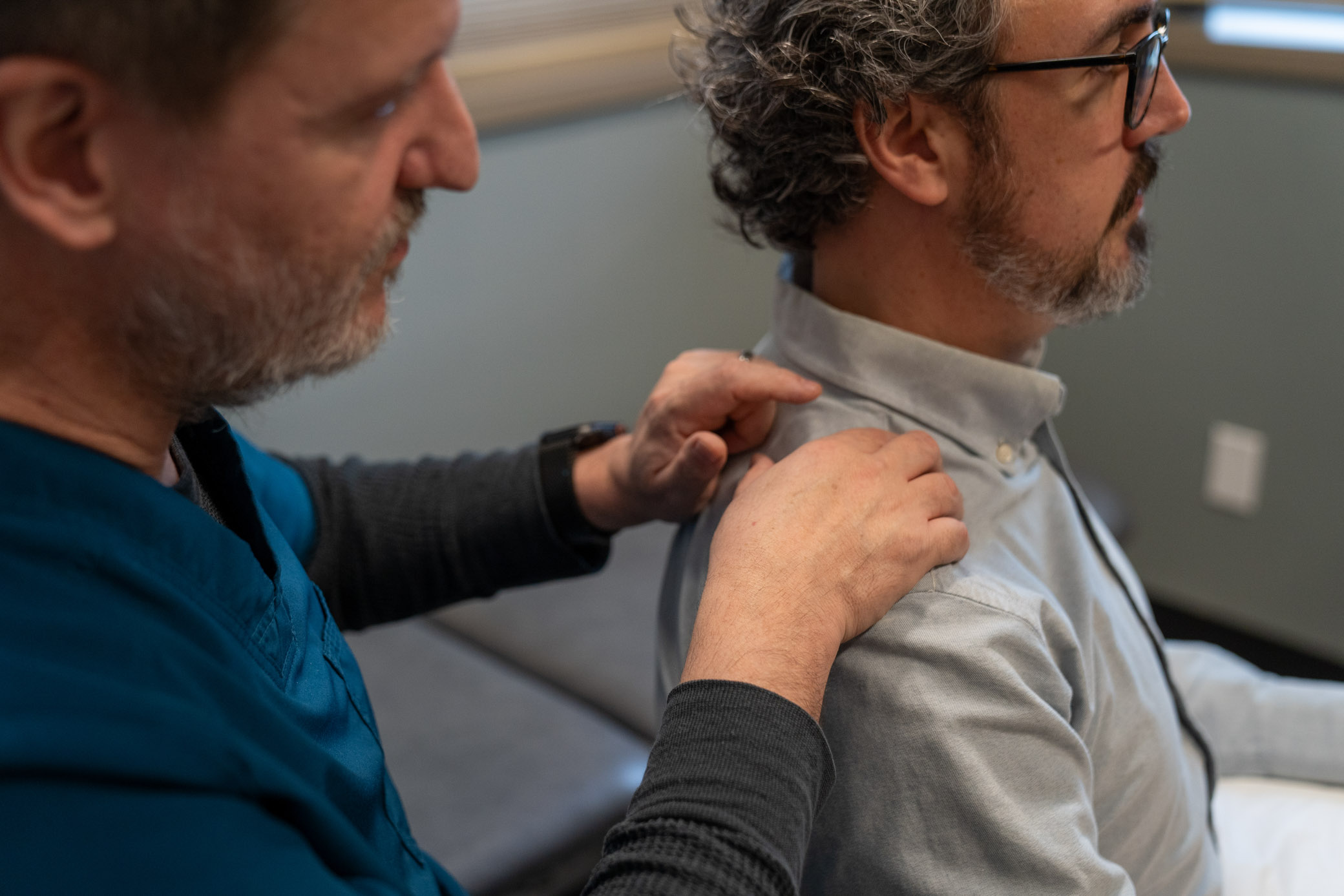
Hands on you
An examination that reproduces your pain rather than describing it. Osteopathic training means the hands are doing diagnostic work, not just reassurance.
- 0:35
Your imaging, read out loud, with you
What it explains and what it does not. Most people leave less frightened of their own MRI report than when they walked in.
- 0:50
One plan, shared with you and your providers
Nerve testing, a targeted injection, or a phone call to your chiropractor and your counselor so that everyone is finally pulling in the same direction.
Before you come
When to get here, and what to bring
When to get here
New patients: 30 minutes early to finish paperwork, or fill the forms in beforehand and just come 10 minutes early.
Follow-ups and EMG: 10 to 15 minutes early is plenty.
What to bring
- Photo ID and insurance card
- Recent imaging: discs or printed reports
- A list of your current medications
- For a crash or work injury: claim number and adjuster contact
Paying for the visit
Car accident PIP is billed directly and pays regardless of fault, usually with no copay or deductible. Washington L&I claims are accepted. Self-pay is welcome, with no referral needed. Commercial insurance is handled case by case: call (425) 678-2044.
Finding the door
Which building, which driveway and which door: the directions page has the map, the parking and the photos.
Directions and parking