Nerve Pain & Radiculopathy
Understanding paresthesias, numbness, and weakness, and finding the true source
What Are You Actually Experiencing?
When different patients of mine have said they had 'nerve pain', they often were not describing the same things. Understanding the specific sensations, and what causes them, is the first step toward effective treatment.
Paresthesias
Tingling, pins-and-needles, or electric sensations. These abnormal sensations can occur when nerves are irritated but not necessarily damaged. But, they can come from muscle referral patterns and central sensitization too, not just nerve compression.
Numbness
Reduced or absent sensation. True numbness means you cannot feel touch, temperature, or pinprick normally in a specific area. This typically indicates nerve dysfunction, though the pattern helps distinguish the source.
Weakness
Reduced muscle strength or function. When a nerve is compressed or damaged, the muscles it supplies may become weak. However, pain-related guarding often mimics weakness without actual nerve damage.
The Unexpectedly Common Culprit: Myofascial Referral
After trauma or repetitive strain, most "nerve pain" doesn't come from nerves at all. It comes from tense, ischemic muscles that send pain to predictable remote zones.
What Is Myofascial Referral?
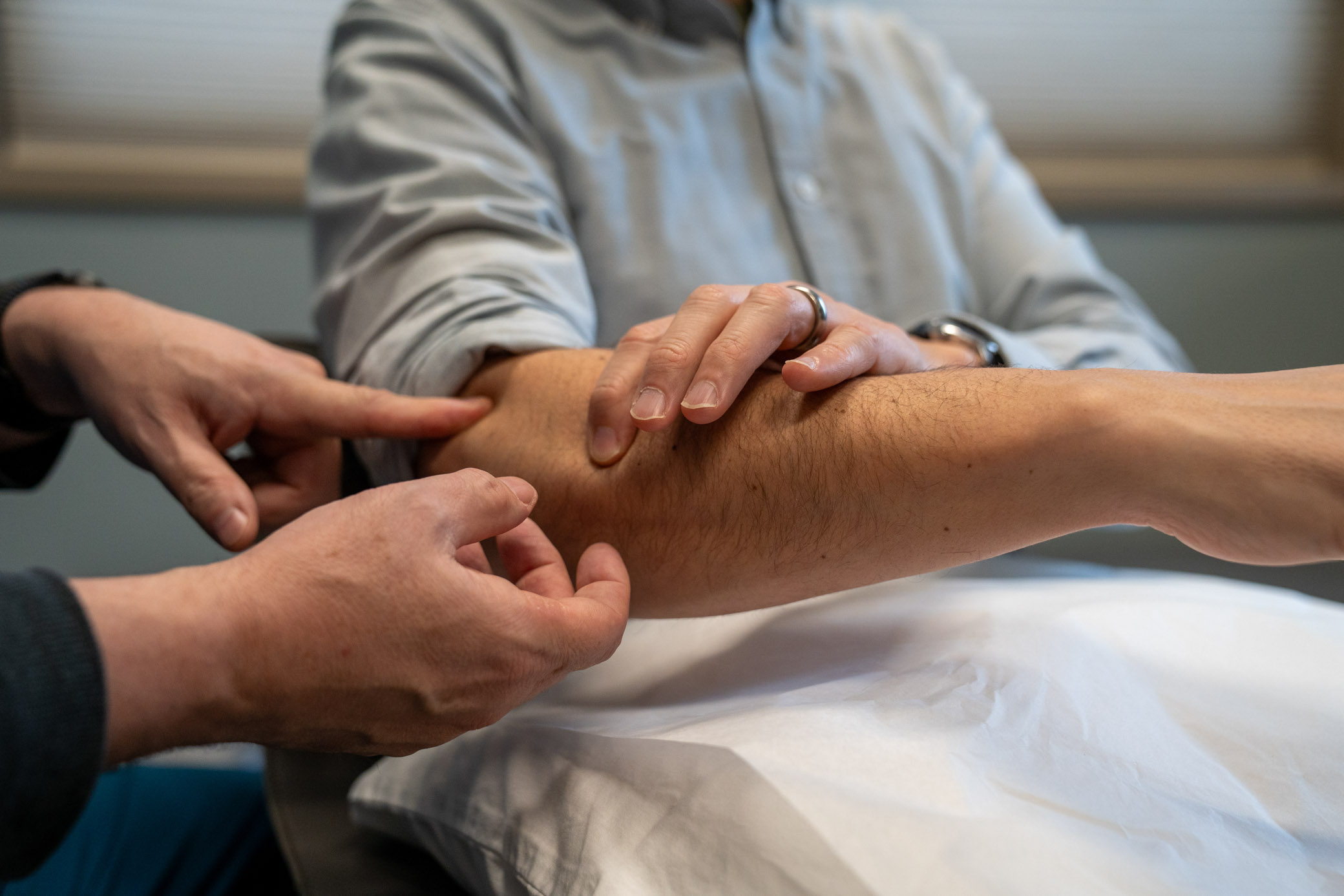
Trigger points in tight muscles create referred pain patterns that often mimic nerve compression. A tight scalene muscle in your neck can create thumb tingling that looks like carpal tunnel. Upper trapezius tension can create pain radiating down the arm.
The key difference: myofascial patterns rarely follow exact dermatomes (nerve territories). Instead, they create patchy, multi-dermatomal distributions that shift with posture and activity.
Why this matters: If we mistake muscle referral for nerve compression, you might undergo unnecessary testing or invasive procedures when targeted muscle treatment would resolve the symptoms faster.
Beyond Myofascial: True Nerve Compression
Peripheral Nerve Entrapment
Carpal tunnel syndrome, ulnar neuropathy, and similar conditions occur when peripheral nerves are compressed at specific anatomic sites. These create predictable sensory patterns that follow the nerve's distribution.
Carpal tunnel, for example, creates numbness and tingling in the thumb, index, and middle fingers (the territory of the median nerve). Unlike myofascial referral, the pattern is consistent, often worse at night, and may be accompanied by measurable weakness.
Electrodiagnostic testing (EMG/NCV) can confirm slowed nerve conduction across the compression site, distinguishing this from myofascial mimics.
Brachial Plexus Irritation
Thoracic outlet syndrome (TOS) and other plexus injuries occur when the nerve bundle between your neck and arm is compressed by tight muscles, abnormal anatomy, or scar tissue after trauma.
Neurogenic TOS creates diffuse arm pain, numbness in the ulnar (pinky-side) distribution, and sometimes hand weakness. The symptoms often worsen with overhead activities or carrying heavy objects.
This is frequently missed because imaging looks normal and the pain pattern doesn't fit a single nerve or dermatome. Careful examination and sometimes selective diagnostic injections are needed to confirm the diagnosis.
Cervical Radiculopathy
Nerve root compression from disc herniation or foraminal stenosis creates pain that radiates down the arm in a specific dermatome pattern, often with weakness and reflex changes.
While this is what most people think of when they hear "pinched nerve," it's actually less common than myofascial referral and peripheral entrapment, especially after motor vehicle accidents where biomechanical studies show disc injury is rare.
True radiculopathy creates dermatomal sensory loss (a stripe-like pattern), weakness in specific muscles, and reduced reflexes. When these objective signs are absent, the pain is more likely myofascial or central in origin.
Spinal Cord & Brain Sources
Myelopathy (spinal cord compression) and central nervous system lesions are rare but serious causes of numbness and weakness. These typically create bilateral symptoms, gait problems, or bowel/bladder dysfunction (very different from the one-sided arm or leg symptoms most patients experience).
We consider these when examination findings don't fit peripheral patterns or when symptoms are progressive and bilateral. Imaging with MRI is the primary diagnostic tool, not EMG.
How I Sort This Out: Sensory Mapping
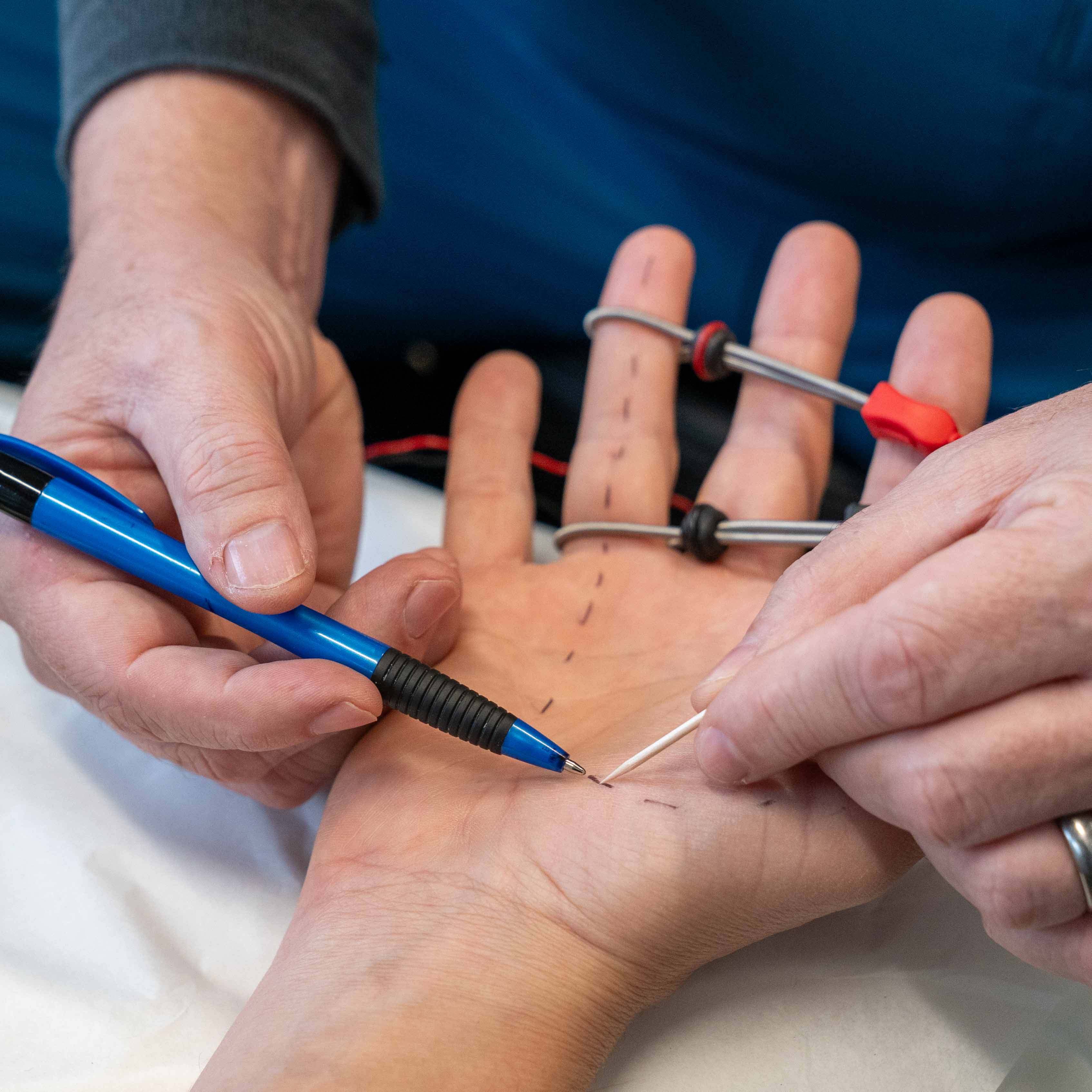
In my clinic, I use sensory mapping, a detailed bedside examination where we map exactly where your sensations are abnormal. This converts your subjective experience into an objective visual map.
A neat dermatomal pattern suggests radiculopathy. A patchy, multi-dermatomal pattern suggests myofascial referral. A peripheral nerve distribution suggests entrapment like carpal tunnel.
When combined with EMG/NCV testing (when indicated), this approach distinguishes muscle-based mechanisms from true nerve damage, preventing over-treatment and pointing toward the right therapies sooner.
Treatment Matches Mechanism
Once we know what's driving your symptoms, treatment becomes targeted and efficient. No guessing, no shotgun approaches, just the right intervention at the right time.
For Myofascial Referral
Trigger point dry needling, specific muscle releases, postural correction, and graduated strengthening. When we calm the muscle, the referred pain resolves, often dramatically and quickly.
For Peripheral Compression
Activity modification, ergonomic changes, targeted stretching, and sometimes splinting or injections. When conservative care fails, surgical decompression is predictably effective.
For True Radiculopathy
Time, nerve-settling medications, epidural injections when inflammatory signs are present, and physical therapy to maintain function. Most resolve without surgery.
Ready to Find the Real Source?
Let's map your symptoms, clarify the mechanism, and get you on the right path, whether that's myofascial treatment, targeted intervention, or confirmation that your nerves are fine and your body just needs reassurance.
Schedule Consultation Call (425) 678-2044