Mind↔Body Recovery
Treating tissue trauma and nervous system guardedness in concert for lasting recovery
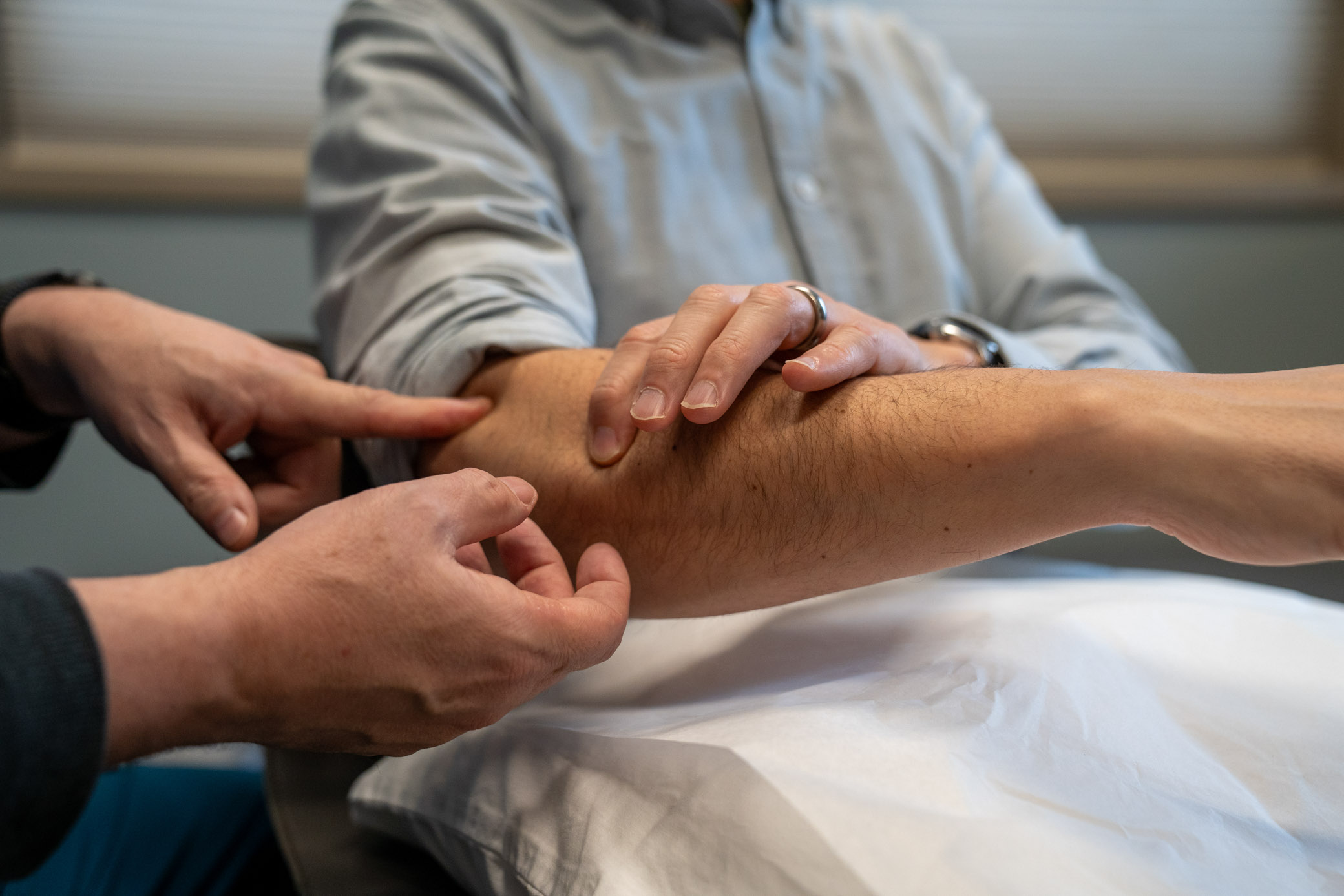
Why Pain Persists After Tissue Heals
After injury, pain comes from two sources: damaged tissues and a sensitized nervous system. Early on, tissue damage dominates. As weeks pass, the nervous system's protective alarm often outlasts the actual tissue injury. Understanding this changes everything about recovery.
Tissue Damage
Muscles, ligaments, and joints are strained or bruised. This creates real, measurable inflammation and mechanical dysfunction that needs time and treatment to resolve.
Nervous System Sensitization
The brain and spinal cord stay on high alert, amplifying normal sensations into pain signals. Stress, poor sleep, and fear make this worse, creating a feedback loop that can persist long after tissues heal.
The Interplay
You can't separate them. Tissue injury triggers nervous system alarm. Nervous system alarm creates muscle guarding, which worsens tissue dysfunction. Treatment must address both simultaneously.
Treating the Whole System
Every intervention is an input to a sensitive system. Physical treatment, exercise, medication, counseling, and injections all affect both tissue healing and nervous system regulation.
The goal isn't to do more or less. It's to give the right input at the right time so the body feels safe, not overwhelmed. Good timing and communication between providers make results faster and longer lasting.
This is why I coordinate closely with physical therapists, chiropractors, and mental health counselors. We're not handing you off between specialists. We're calibrating inputs together.
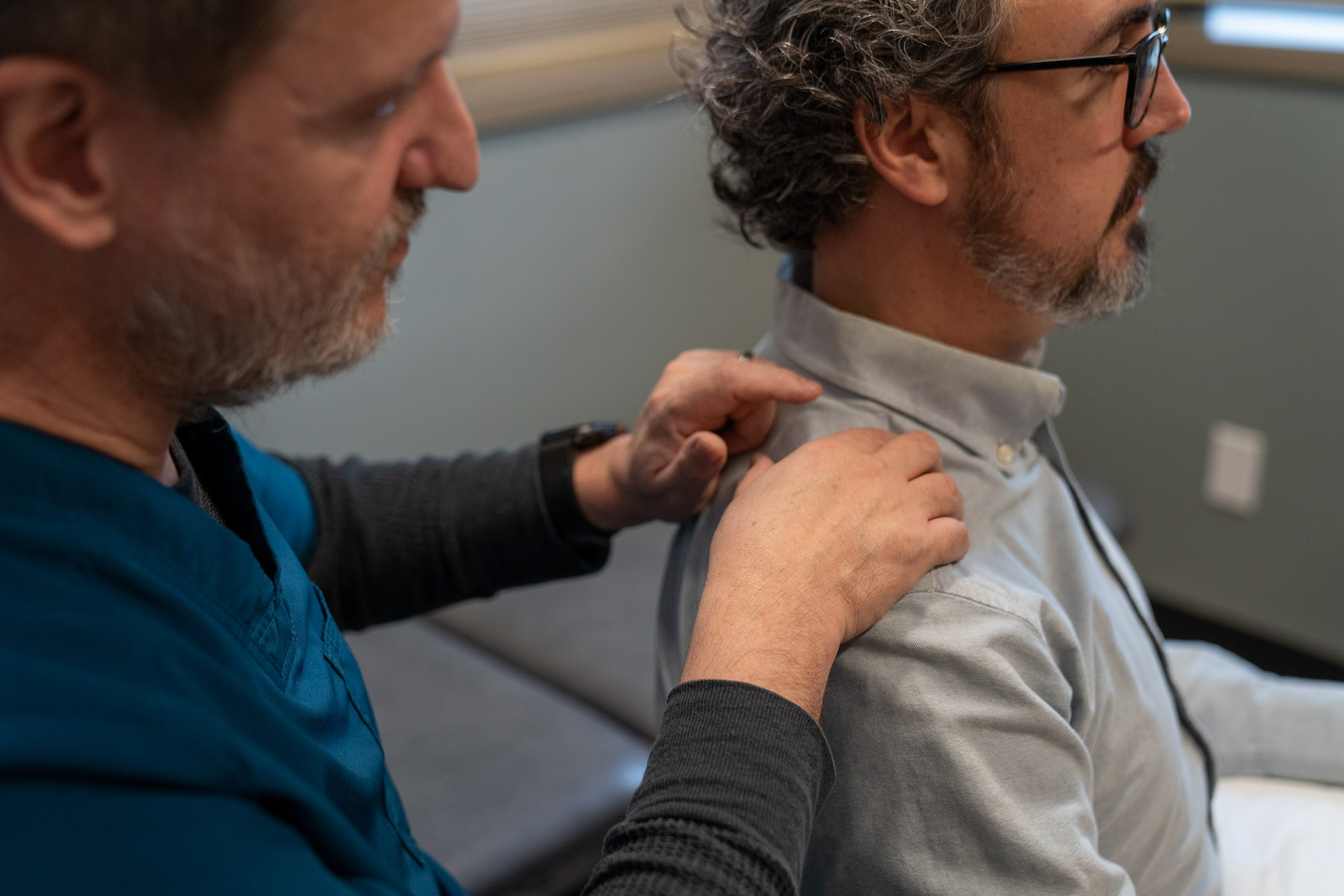
What This Looks Like in Practice
Pain Neuroscience Education
Understanding how pain works changes how you experience it. When you know that pain doesn't always mean harm, that your nervous system can misinterpret safe sensations as threats, and that gradual movement actually helps rather than harms, your brain recalibrates its alarm system.
I spend time explaining this in every initial consultation because it changes everything about how you approach recovery.
Pacing, Not Pushing
After injury, you're often told to either "rest completely" or "push through it." Both are wrong. The nervous system needs graduated exposure to movement, not dramatic swings between rest and overexertion.
We work with your physical therapist or chiropractor to find the right dose: enough activity to signal safety, not so much that you flare repeatedly. This is where coordination matters most.
Addressing Sleep, Stress, and Catastrophic Thinking
Poor sleep and high stress amplify pain signals directly. Catastrophic thinking ("I'll never get better," "Something must be seriously wrong") keeps the alarm system firing.
Sometimes I refer to a mental health counselor who specializes in injury recovery. Sometimes we work on these factors directly through education and reassurance. Either way, they're not secondary concerns. They're central to recovery.
Targeted Interventions When Needed
Trigger point injections, hydrostatic IMS, and other procedures aren't just about tissue. They're about interrupting the pain-guarding-pain cycle. When a muscle has been locked in spasm for weeks, releasing it gives the nervous system permission to calm down.
But timing matters. Too early, and you're treating noise. Too late, and patterns have solidified. This is where clinical judgment and coordination with your other providers becomes essential.
Your Role in Recovery
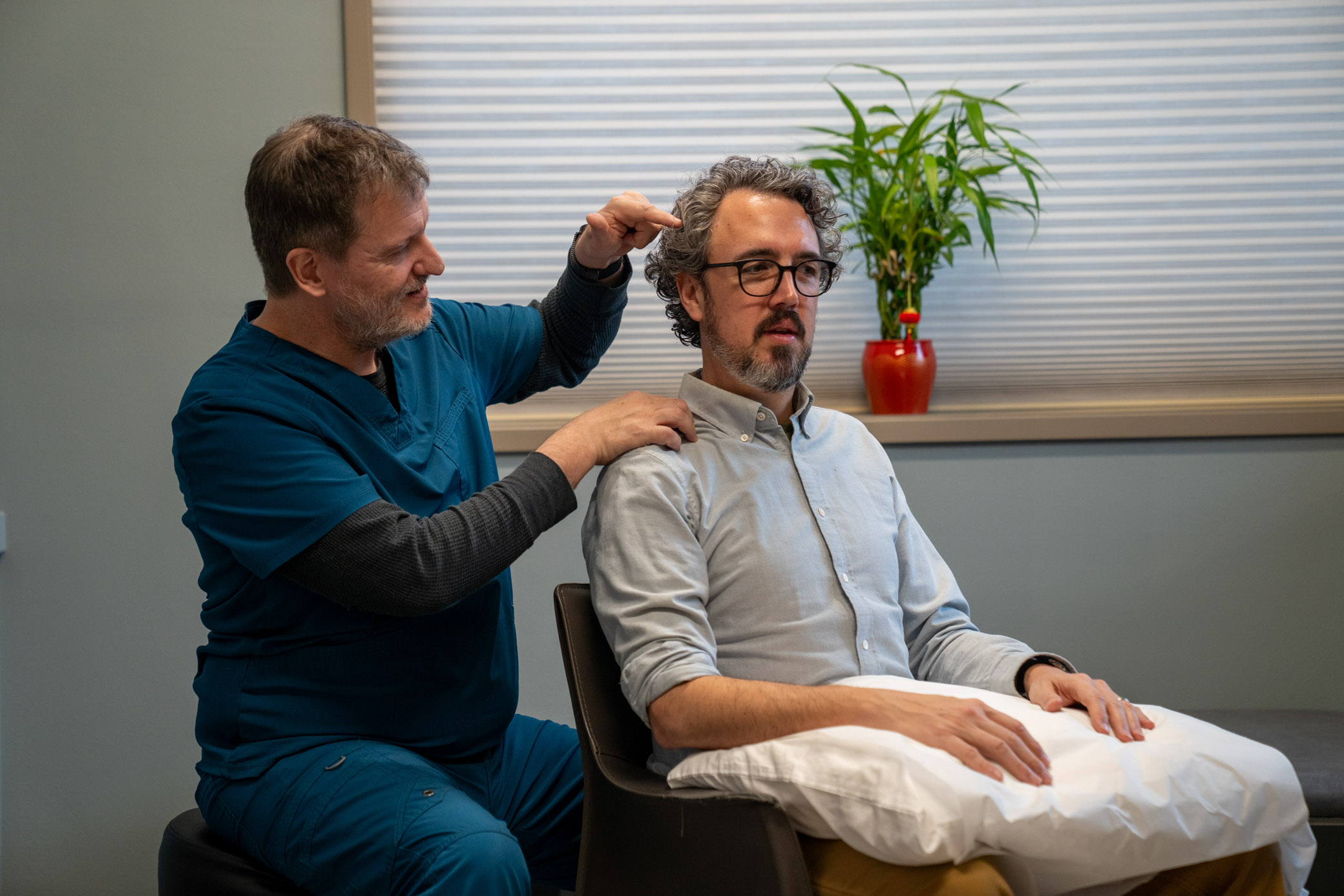
I can diagnose, treat tissue dysfunction, and coordinate with other providers. But nervous system recalibration requires your active participation.
This means: gradually increasing activity even when you're scared, trusting that movement is safe, maintaining sleep routines, and communicating honestly about what's working and what isn't.
Recovery isn't something that happens to you. It's something you do, with skilled guidance and support.
Start Integrated Mind↔Body Recovery
Whether you're dealing with persistent pain after injury, struggling with the psychological burden of chronic symptoms, or simply looking for a provider who treats the whole system, this approach offers a path forward.