Two structures often drive the low back pain that follows a collision, and both are easy to mistake for a disc problem. The psoas is a deep muscle in front of the spine. The sacroiliac (SI) joint sits at the back of the pelvis. After a crash I often see both irritated at once, as part of the same movement pattern.
Telling them apart
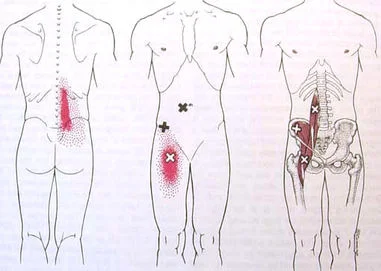
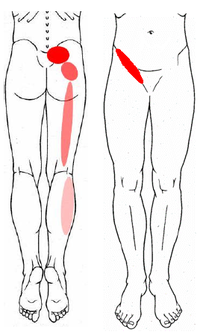
| Psoas | SI joint | |
|---|---|---|
| Where it hurts | A deep ache running up and down along the spine, in the groin crease, and a vague ache or burning down the front of the thigh. | The buttock, radiating down the outside of the thigh to the knee. A deep ache, burning, or tingling. |
| What sets it off | Standing up straight after sitting. Patients often feel they have to "unfold" their hips before walking comfortably. | Standing, sometimes sitting. Bending backward often hurts more than bending forward. |
| The typical crash | Rapid deceleration, like hitting the brakes before impact. | Vehicles of different heights (a car and an SUV), or a struck vehicle with a tow hitch. |
The psoas
The iliopsoas is two muscles, the psoas major and the iliacus. They are the primary hip flexors, lifting the leg to walk or run. But the psoas also attaches directly to the lumbar discs and vertebrae, so when it contracts it compresses the lumbar discs and joints. In a healthy back, this provides stability. In an injured back, it can become a source of crushing pressure.
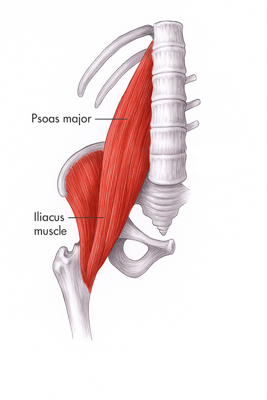
The body is thrown forward while the lower body is fixed by the seatbelt and floorboard.
The psoas contracts explosively to "catch" the spine and prevent hyperextension.
The muscle locks into spasm, pulling vertebrae forward and down, compressing discs and jamming facet joints long after the crash.
The sacroiliac joint
The SI joint is where the bottom of the spine (sacrum) meets the hip bones (ilia) on both sides. It is a recognized source of pain after missed steps, falls, and the rotational forces of a collision.
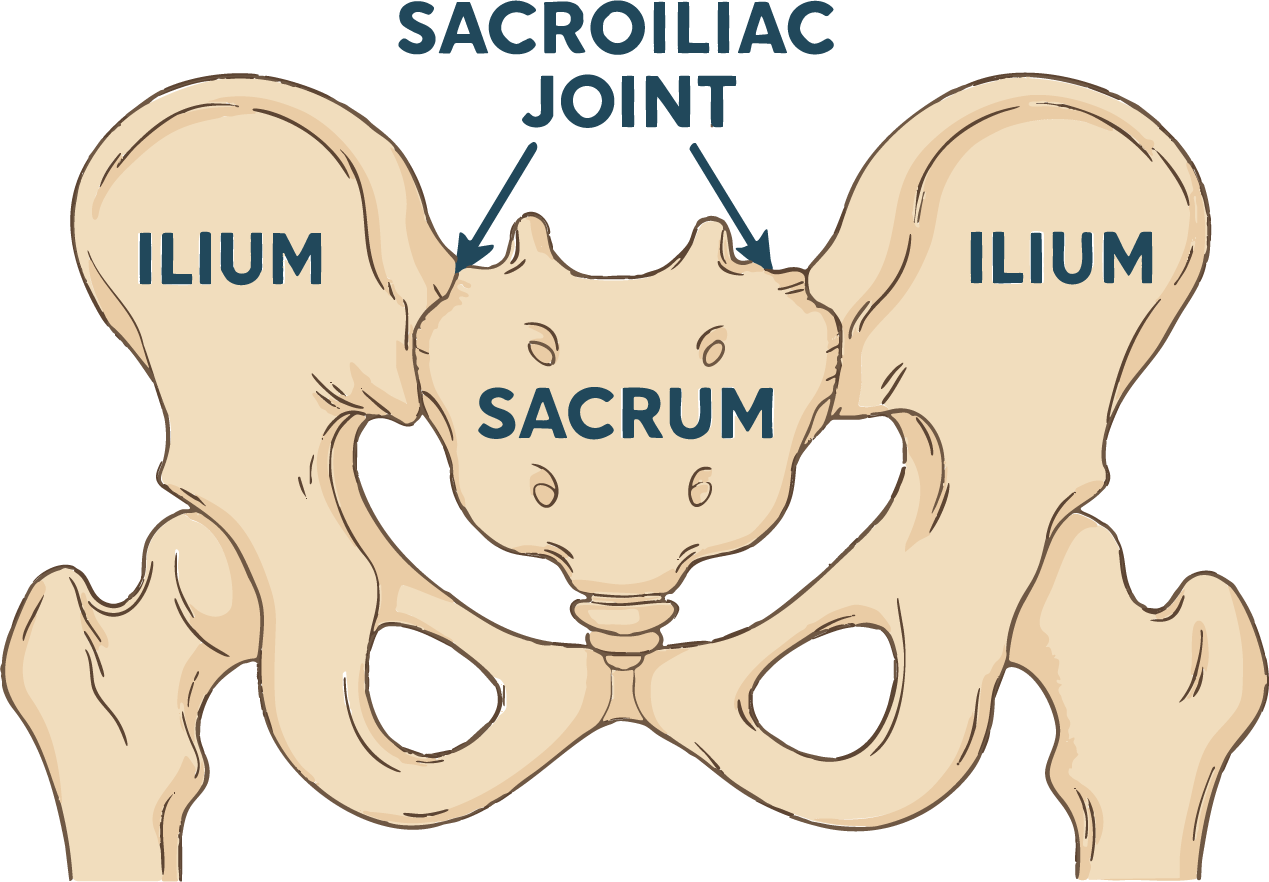
When the vehicles are different heights, the mismatch imparts vertical shear and torsional loading through the pelvis. That is why buttock-to-lateral-thigh pain and anterior hip or groin tightness so often occur together.
Not the disc
The literature lists disc pain as the most common cause of low back pain, but sacroiliac joint involvement appears more often in real-world crashes, because of seatbelt asymmetry and vertical shear.
The distinction: disc pain typically comes from small tears inside the disc and causes deep, central back pain but rarely leg symptoms. It responds best to conservative rehabilitation. Epidural steroid injections usually fail here because the problem is inside the disc, not a pinched nerve. What your MRI says about your discs →
Treatment
For the psoas
Skilled manual therapy reaches the psoas through the abdomen. It is often uncomfortable but can provide immediate initial relief if the muscle releases. We then lengthen the hip flexors and strengthen the glutes to hold the new alignment. For stubborn cases I use hydrostatic IMS: a fine needle into the muscle belly and a little sterile saline, whose gentle pressure helps the fibers release their grip on the spine.
For the SI joint
Sacroiliac joint injections can be very effective when done early, typically within 1–10 months of injury. In my experience, a single steroid injection to the SI joint is often curative for this form of pain. If relief lasts only 3–4 weeks, that pattern often suggests ligamentous laxity, and I transition to prolotherapy or PRP for longer-lasting stabilization.
Summary: The psoas and the SI joint are hidden drivers of low back pain after a crash, and both mimic disc pain. Finding which one is involved, and often it is both, is usually the key to resolving it.