Electrodiagnostics (EMG/NCV)
Precision with perspective to clarify diagnosis, reduce uncertainty, and even treat the pain
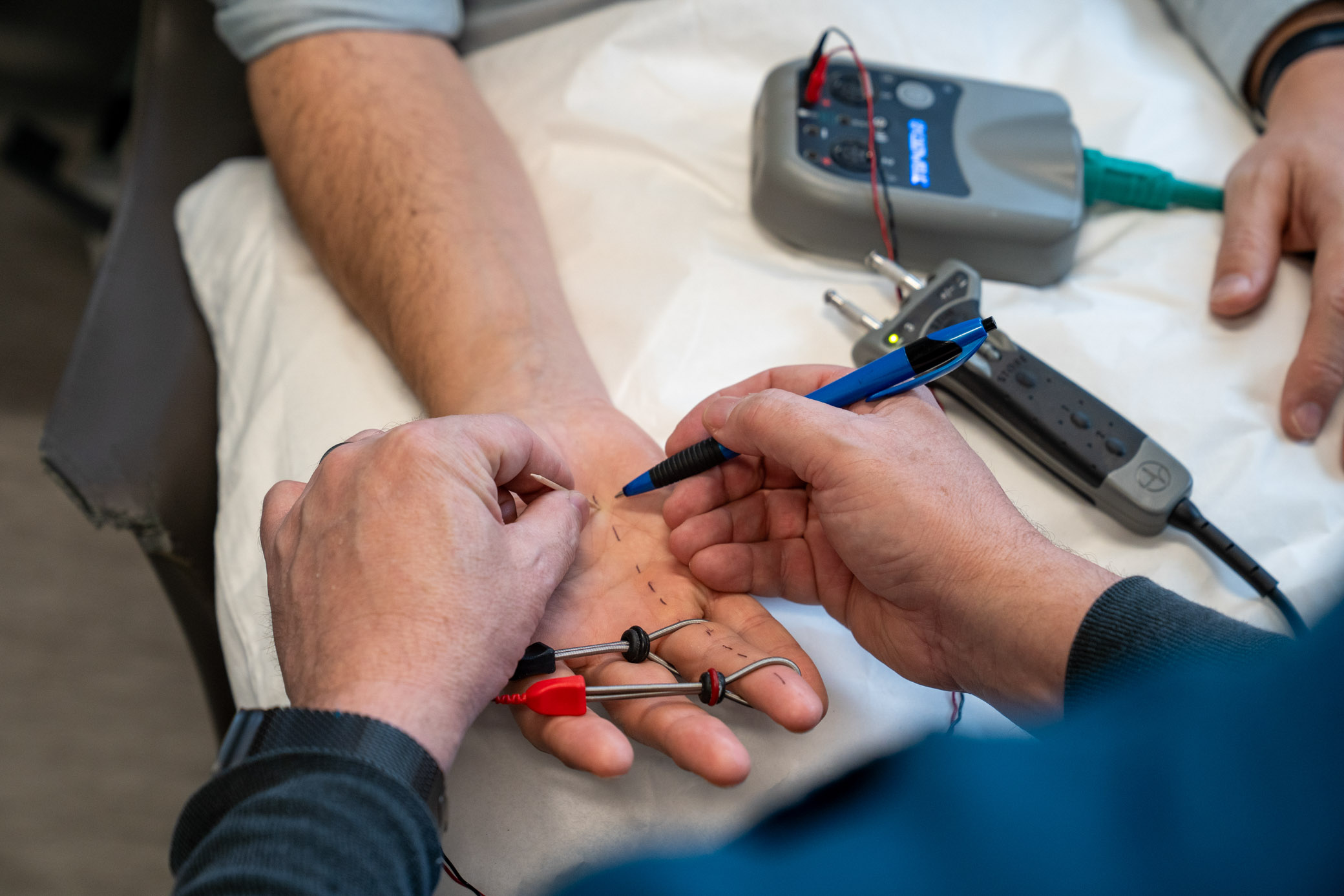
What EMG & Nerve Conduction Studies Are For
After an injury like a motor vehicle accident, symptoms like numbness, weakness, or radiating pain can appear. This can be from nerve injury, either in the spine, arms, hands, or from the brachial plexus. But interestingly, this numbness can also present as a result of myofascial pain referrals, which occur surprisingly often with MVAs.
Nerve Conduction Studies (NCS)
Measures how well electrical signals travel along peripheral nerves. Identifies compression, damage, or slowed conduction that leads to numbness, tingling, or weakness in the arms, hands, legs, or feet.
Electromyography (EMG)
Listens for muscle electrical activity, both at rest and during contraction. Distinguishes between nerve root irritation, peripheral nerve injuries, and primary muscular disorders. Can also be used to find areas of muscle hyperactivity that occur in myofascial pain syndrome.
Diagnostic Clarity
Taken together, these tests help clarify clinical questions: Is the problem in the myofascial system, the spine, the brachial plexus, or some other peripheral nerve source? Will surgery be needed or will conservative care suffice? This information guides smarter, more coordinated treatment decisions.
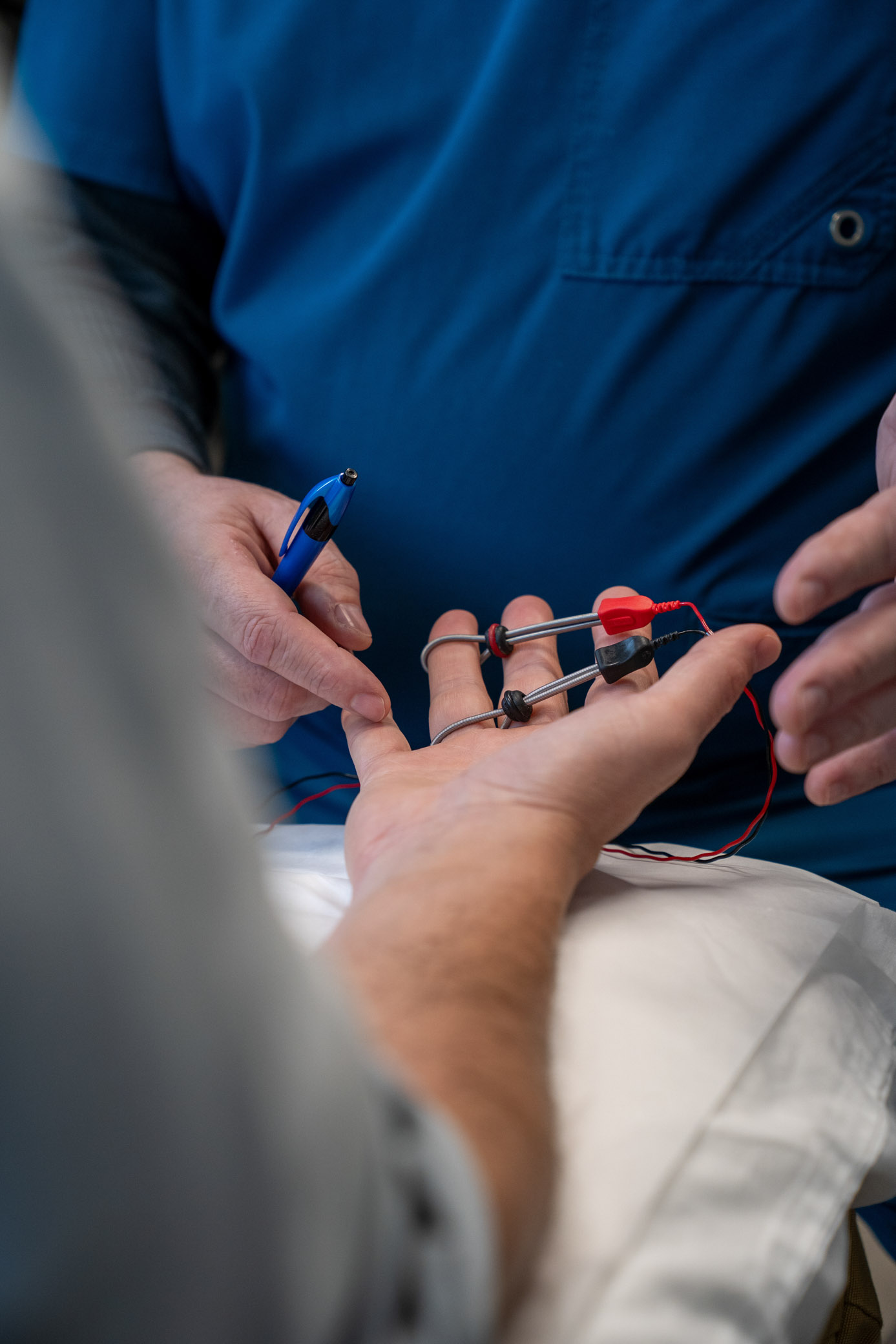
Clarifying Complex Symptoms
In motor vehicle accidents, whiplash, and other trauma, pain and numbness often overlap. EMG and nerve conduction studies can help distinguish radiculopathy (nerve root compression) from peripheral nerve entrapment (like carpal tunnel syndrome) and myofascial pain syndromes.
This precision diminishes the need for exploratory surgeries, prevents misdiagnosis, and allows your providers to provide more targeted treatment.
How I Use EMG in My Practice
Diagnostic Precision
EMG helps me identify where the symptoms are coming from and allows me to target rehab in a way that reduces unnecessary procedures.
Reducing Fear & Uncertainty
I approach these tests in a fashion my patients appreciate. They're often scared coming in but walk away put at ease. Patients often fear permanent damage - seeing the objective results helps reduce catastrophic thinking and allows them to more fully engage in physical therapy and other recovery modalities.
Coordinating Care
The results are shared with your physical therapists, chiropractors, pain specialists, and sometimes surgeons. This makes it so everybody's working from the same diagnostic foundation, which improves collaboration and outcomes.
Longitudinal Monitoring
If a follow-up study is needed, we have something to compare it to, to see how the nerve is recovering or progressing over time. This guides decisions about whether to continue conservative care or escalate to surgical evaluation.
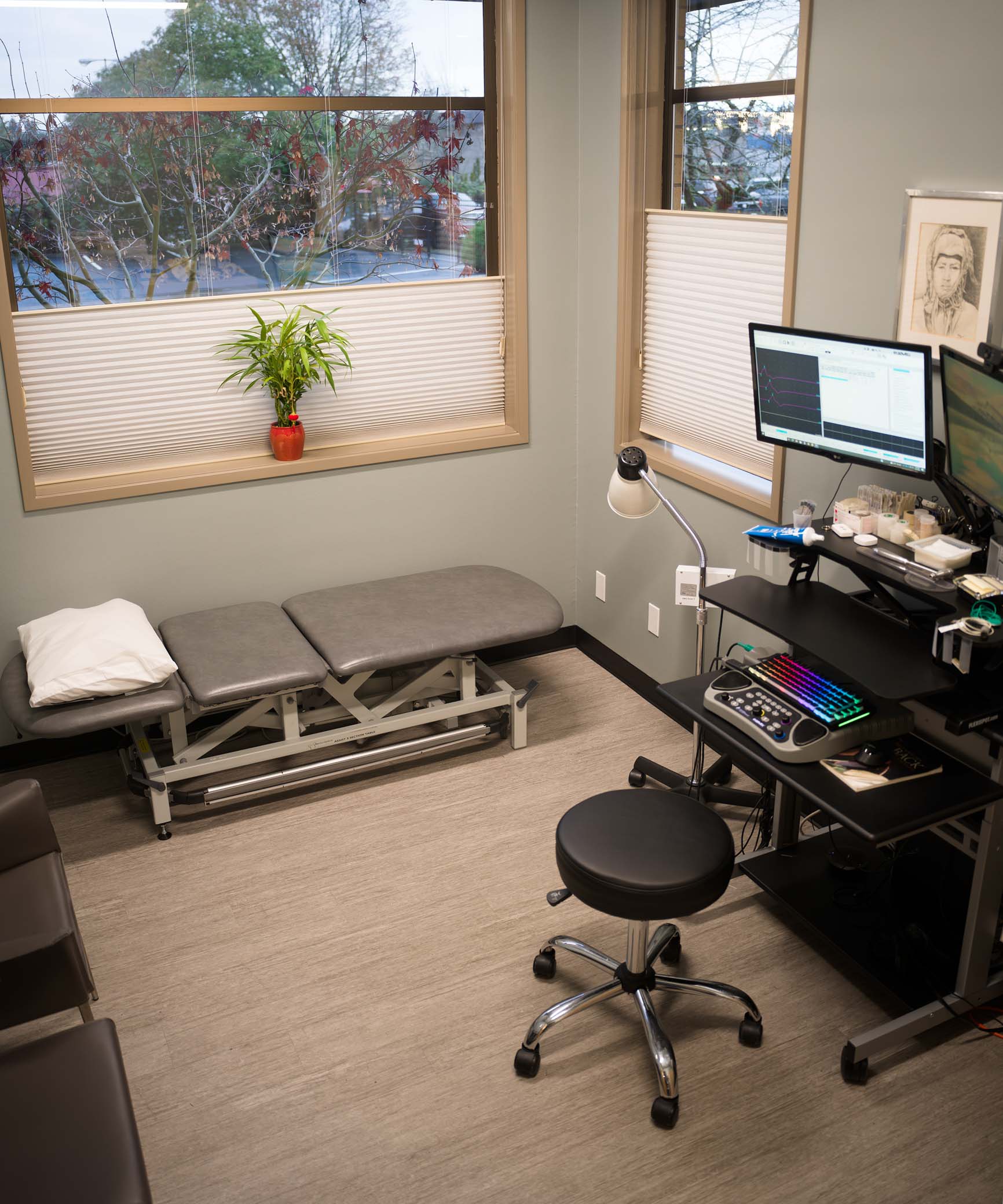
Twenty Years of Electrodiagnostic Practice
Electrodiagnostic medicine is a core component of physical medicine and rehabilitation, the specialty I am board certified in, and it has been the focus of my practice for twenty years. I perform every study myself and interpret it myself, so the physician who examines you is the one reading the result.
My approach integrates electrodiagnostic findings with clinical context, ensuring results inform coordinated, patient-centered care rather than existing in isolation.
Get Diagnostic Clarity
Whether you're recovering from a motor vehicle accident, dealing with unexplained numbness, or just need a second opinion on nerve symptoms, electrodiagnostic testing provides objective answers.