



Moving October 1 to 7631 212th St SW, Suite B-105, Edmonds. Across from Edmonds-Woodway High School, with free parking. Same phone: (425) 678-2044
A family on a grassy bluff above Puget Sound, flying a kite in a wide blue sky

“Care that looks below the surface.”

Nothing on the scan explains it. That doesn’t mean nothing is wrong.

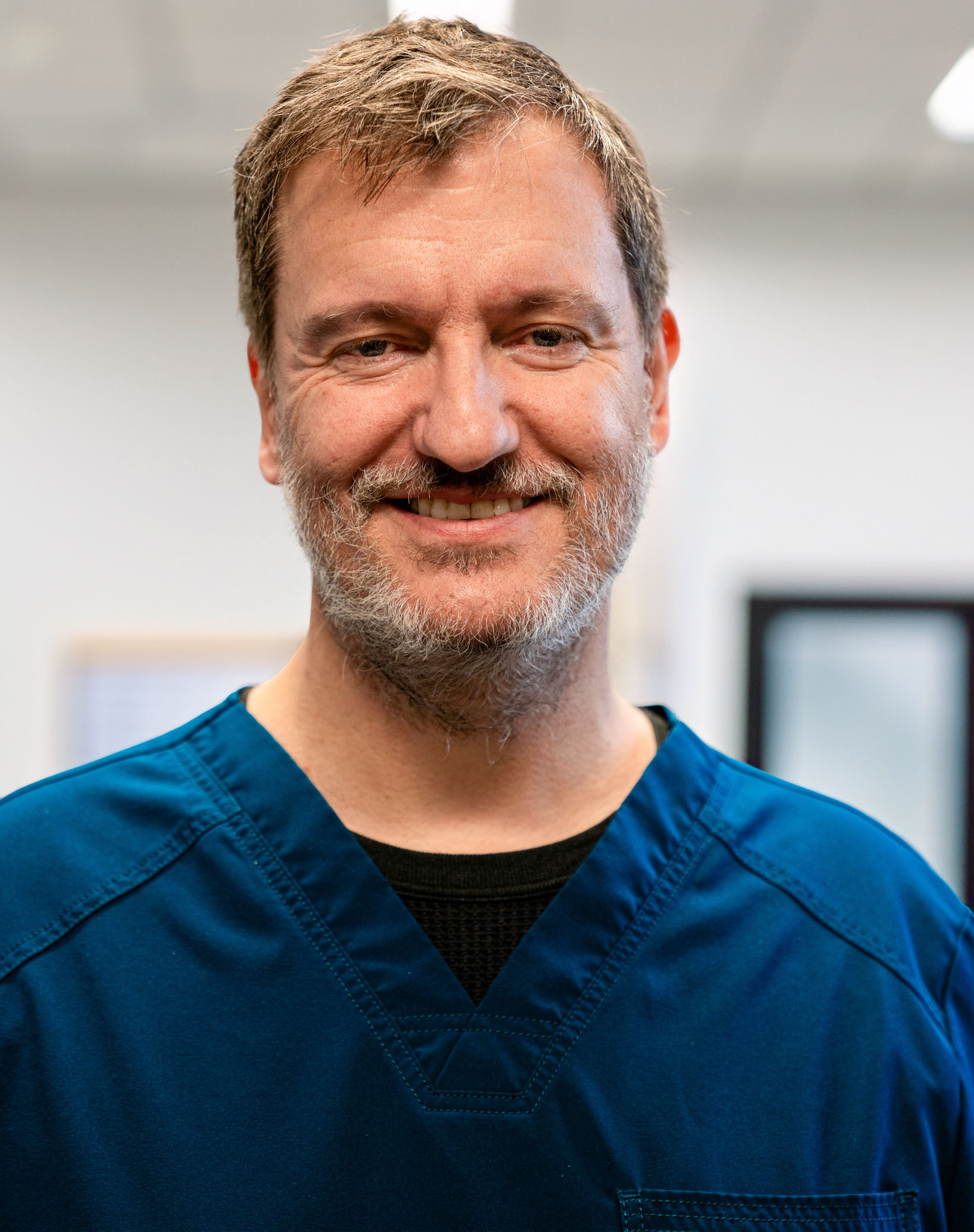
I’m Dr. Kelvin Franke, a board-certified physiatrist in Edmonds. I spend the first hour finding out what is actually happening, then I explain it until it makes sense.

Where you are

You are not exaggerating, and you are not unusual.

Recoveries stall in a handful of predictable ways. If more than one of these describes the last six months, that is useful information. It means there is a pattern here, and patterns can be interrupted.

Lots of imaging, no unifying answer Scans come back showing ordinary wear, and nothing in the report explains why you cannot sit through a meeting or sleep through a night.
Treating what is visible while the source stays submerged A minor abnormality becomes the target. The interventions get more invasive while the relief gets shorter.
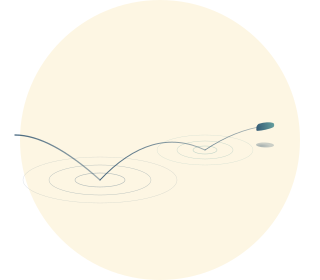
Care that skips like a stone from provider to provider Each office is competent. None of them is working from the same goal, and you are the one carrying the messages between them.
The mind-body connection treated as an afterthought Sleep loss and fear are rarely side effects. After a trauma they often drive the pain, and a plan that ignores them keeps coming up short.

What’s actually happening

A crash injures three things. The scan sees one.

A collision does not injure one system. In the same second it strains tissue, switches on a protective alarm, and disrupts how the brain handles balance and concentration. Almost everyone arrives talking about the first. The other two go unmentioned, and they are usually why recovery stalls.

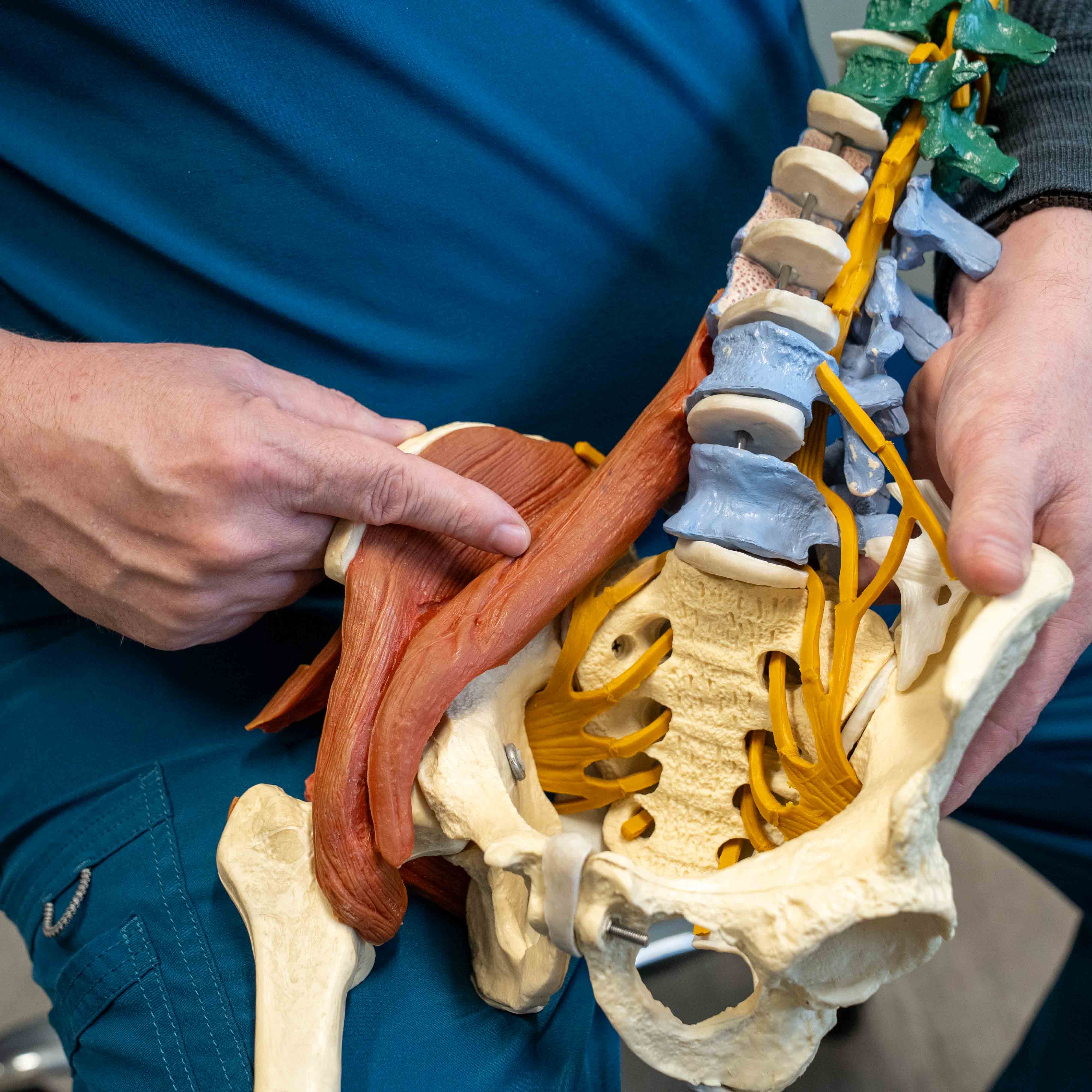
The tissue part hides too. A knot in the scalenes sends pain down the arm to the thumb; the iliacus, deep in the pelvis, mimics a disc almost perfectly. An MRI photographs structure. It cannot image a muscle that has learned to guard, or show a referral pattern, so the report reads reassuring while you hold a symptom nobody has named.

And the three feed each other. Tight muscle keeps the alarm on, the alarm keeps the muscle tight, an overloaded brain makes both worse. Treat one leg and the stool still wobbles. Your sleep and your dread belong in the plan, not at the end of it.

The longer version: one collision, three systems →

Twenty more pieces on trigger points, whiplash and nerve testing. Free, and you do not have to be a patient. Browse the library →

Dr. Franke holding an anatomical model of the lumbar spine and pelvis, his thumb on the iliacus muscle
The iliacus, on the model. It refers pain into the low back and groin, and no MRI will ever show it doing that.

What I do about it

Three things I can promise

These are built into the schedule. They don’t change because the day got busy.

60min

Your first appointment

A full hour, so the history gets taken properly and the exam gets done properly. Follow-ups are thirty minutes. That is a scheduling decision, not a good intention.

7days

Typical wait for nerve testing

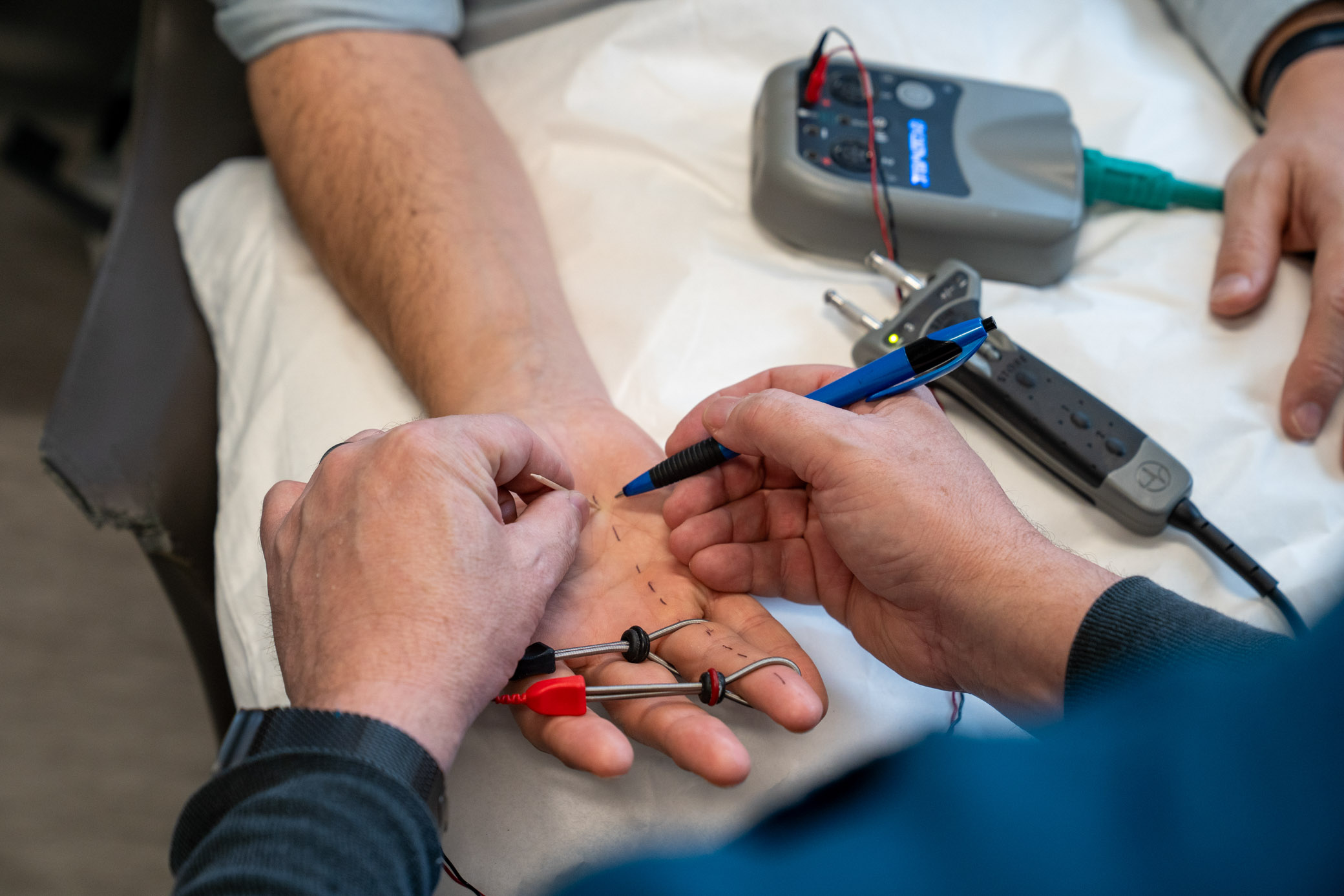
EMG and nerve conduction studies are usually scheduled within a week, and the report is completed and sent within one business day.

1doctor

From the first visit to the last

I take the history, do the exam, run the nerve study, read it myself, and make the calls to your other providers. Nobody hands you off.

A colleague of twenty years, on that first number

“I have worked with Dr. Franke for nearly 20 years… In most other practices, patients today are seen for 10 minutes and then directed to make another appointment. I long for the good old days where your Doctor actually connects with you as a person first… Dr. Franke is the old-fashioned Doctor that I desire for all patients.”

Nancy Mitrano, MS, PT, CMP, DPT, CCRT Owner, Impact Physical Therapy · 2026

Conditions I treat

  • Nerve pain & radiculopathy
  • Neck & back pain
  • Myofascial pain & trigger points
  • Joint pain & stiffness
  • Post-traumatic stress & the nervous system
  • Traumatic brain injury

Your first appointment

An hour is not generosity. It is the minimum this takes.

  • 0:00

    The whole story, without being interrupted

    How the collision happened, where the seatbelt sat, which way your head was turned, what hurts at three in the morning. The mechanism tells us where to look.

  • 0:15

    Hands on you

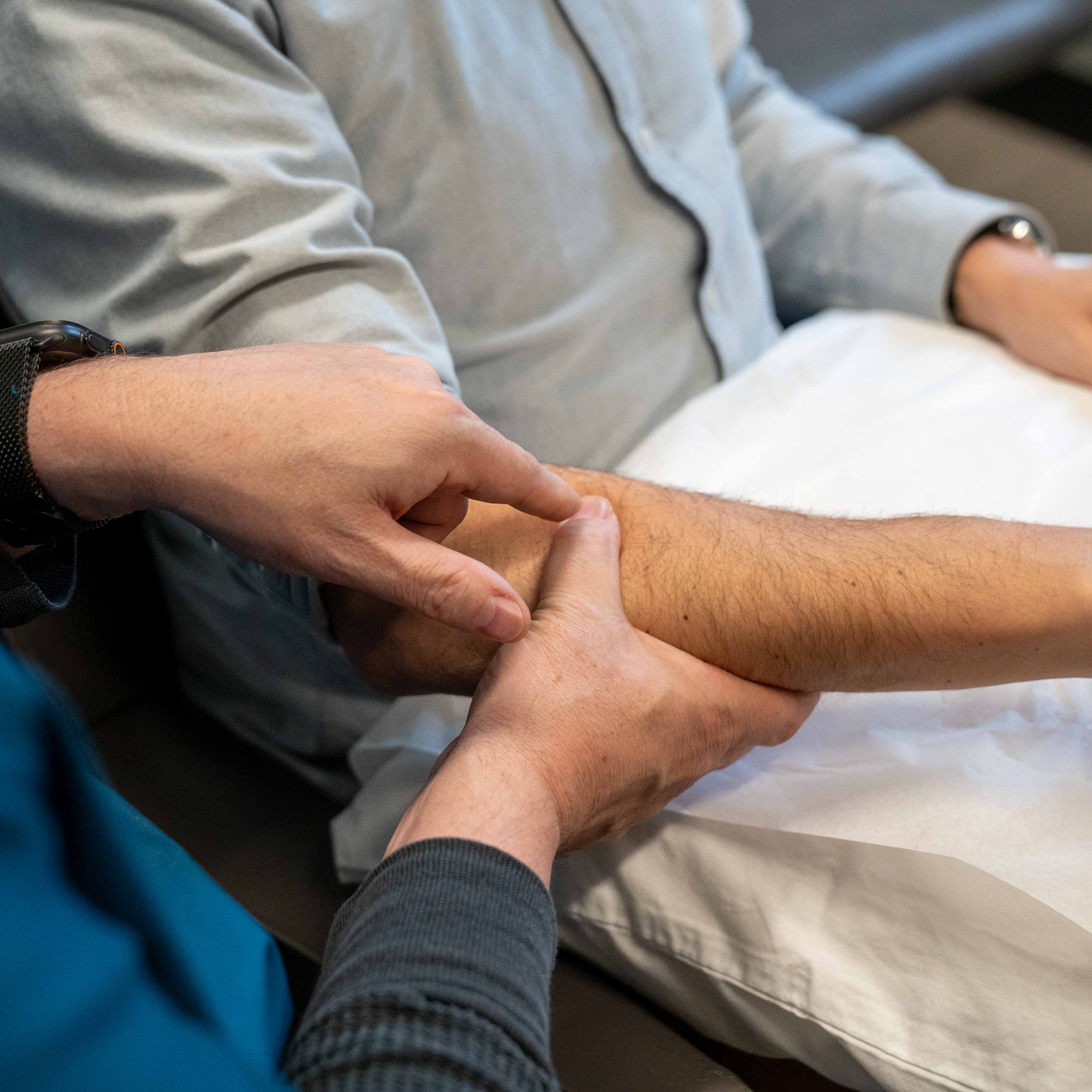
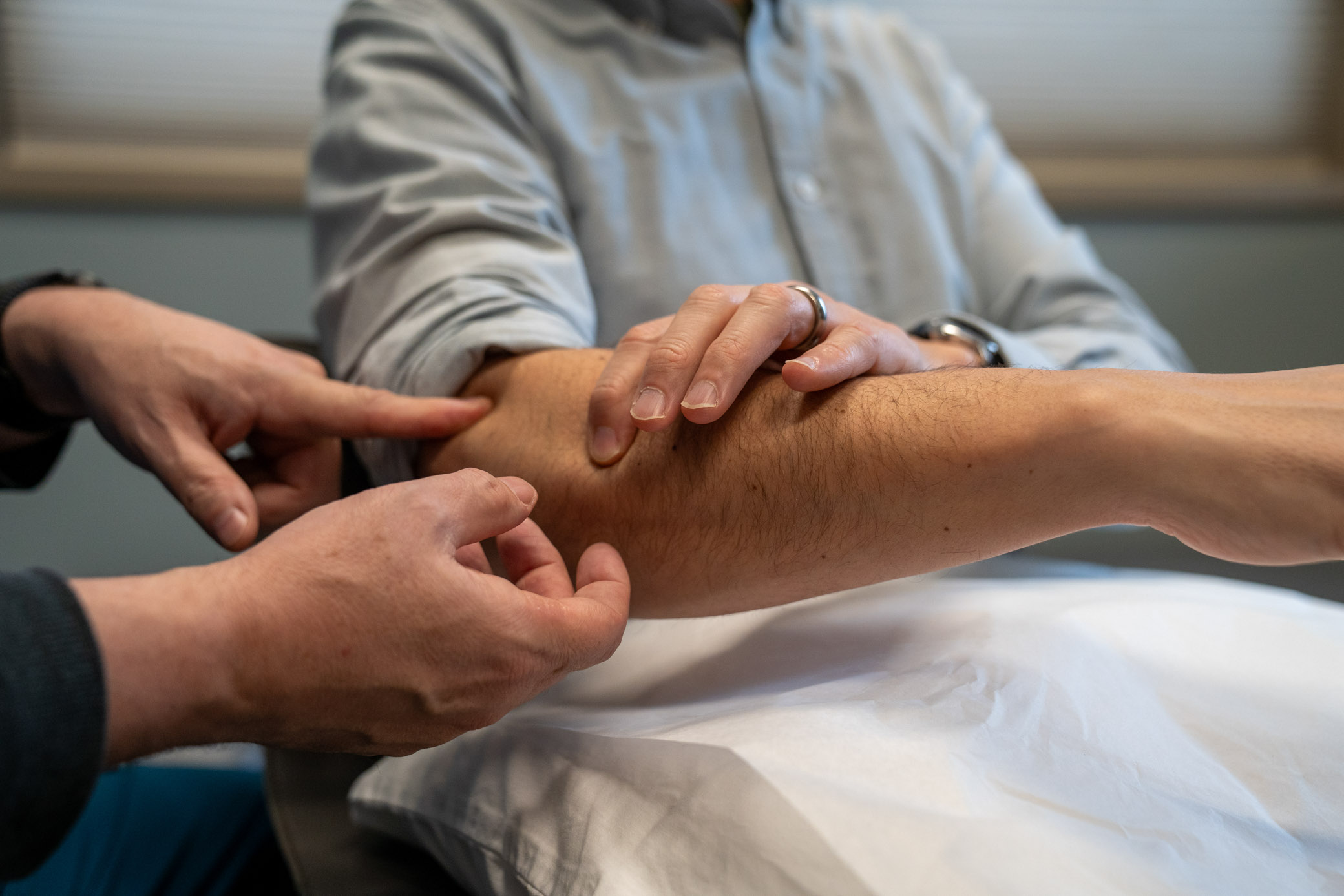
    An examination that reproduces your pain rather than describing it. Osteopathic training means the hands are doing diagnostic work, not just reassurance.

  • 0:35

    Your imaging, read out loud, with you

    What it explains and what it does not. Most people leave less frightened of their own MRI report than when they walked in.

  • 0:50

    One plan, and who else needs a copy of it

    Nerve testing, a targeted injection, or a phone call to your chiropractor and your counsellor so that everyone is finally pulling the same direction.

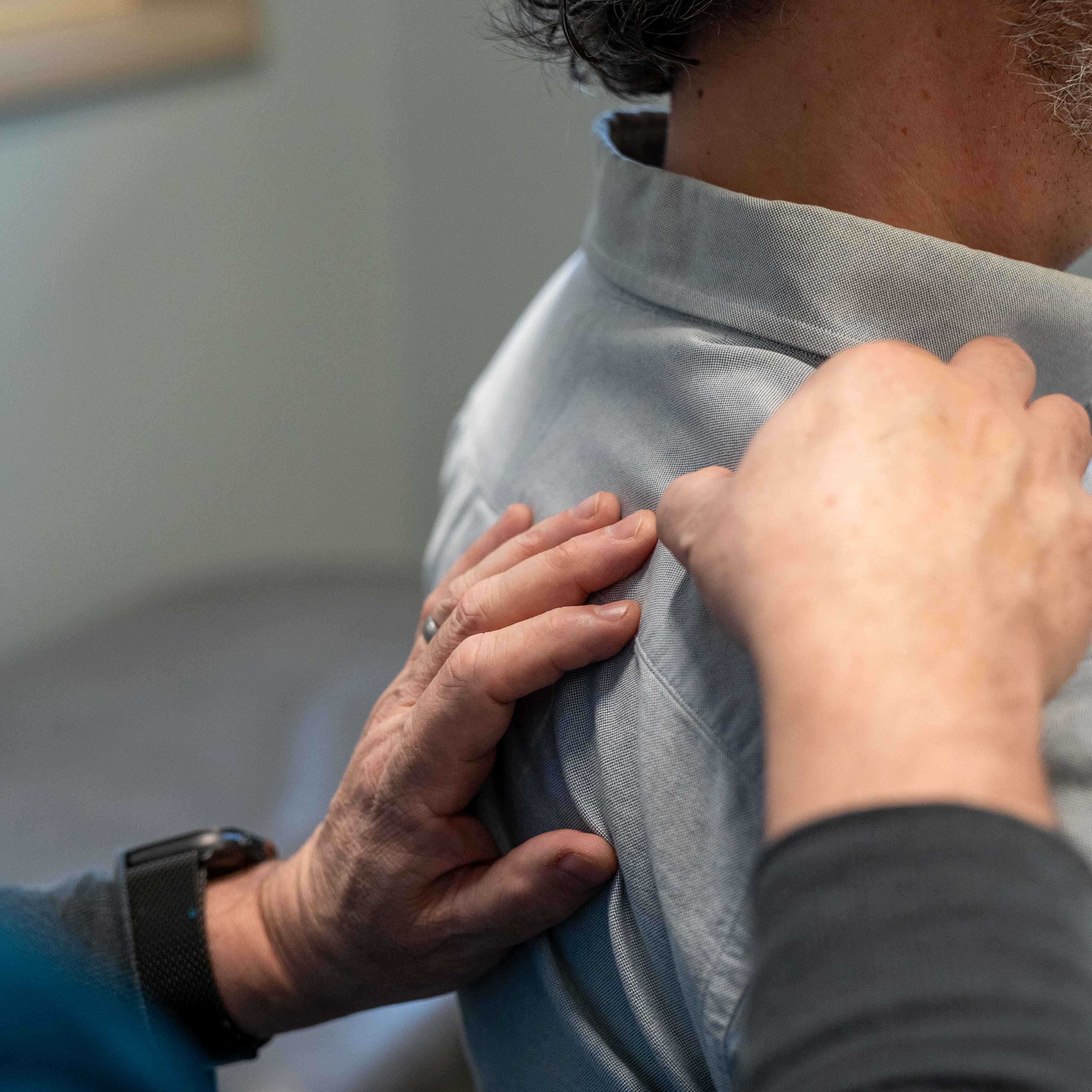
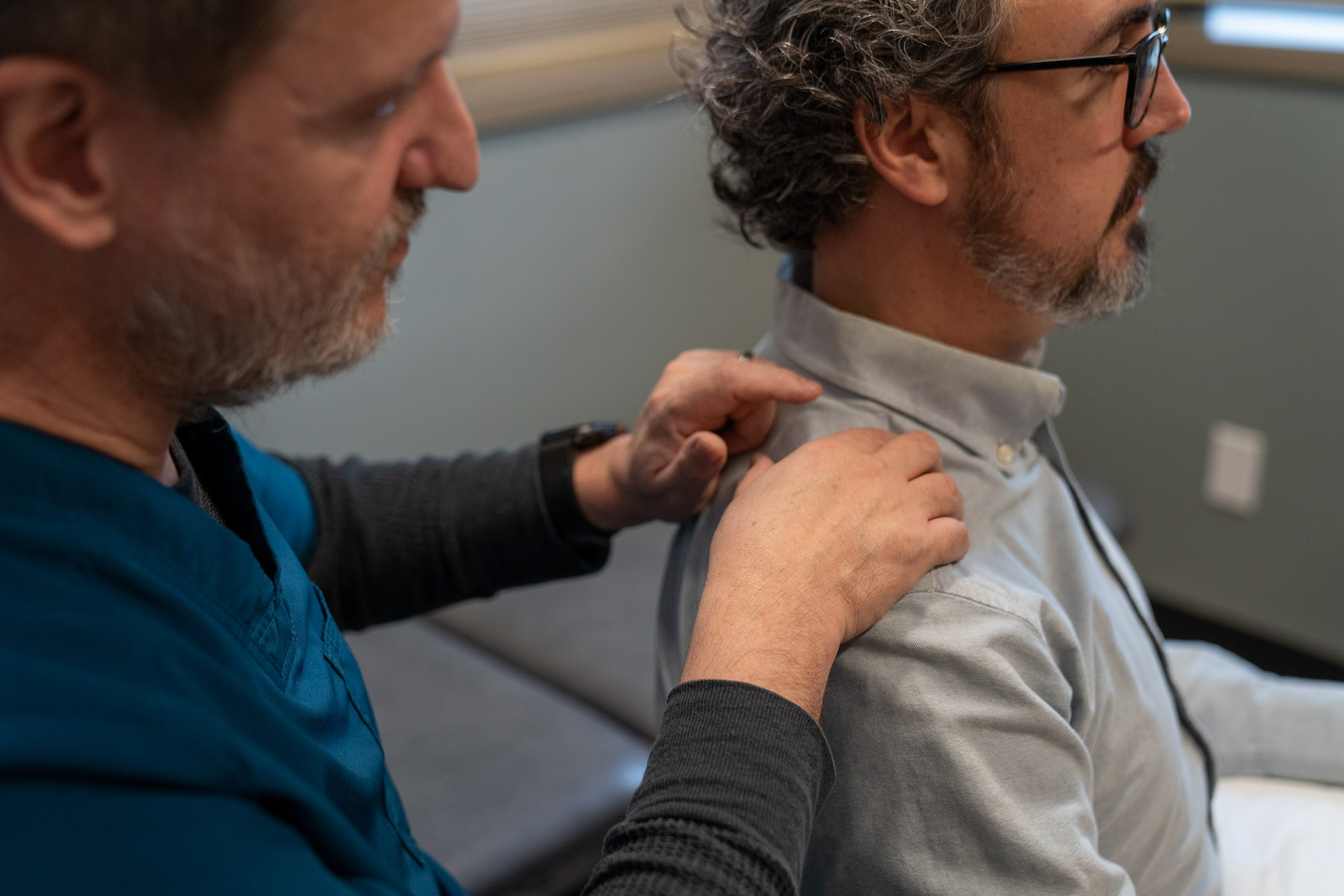
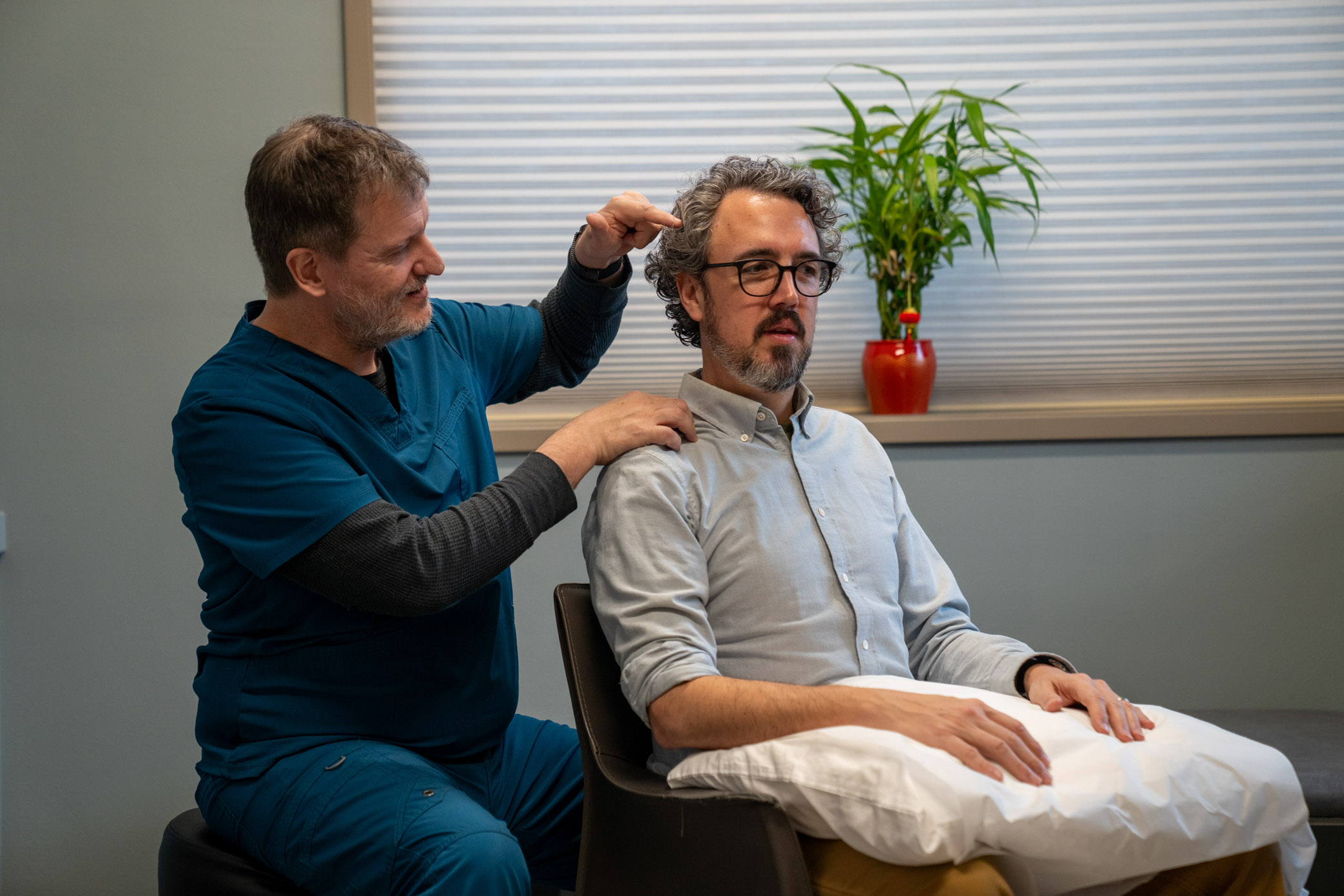
Dr. Franke examining a patient's neck and shoulder, both men in profile
Finding the thing that reproduces the pain is usually the whole ballgame.

The room

Quiet is a clinical decision.

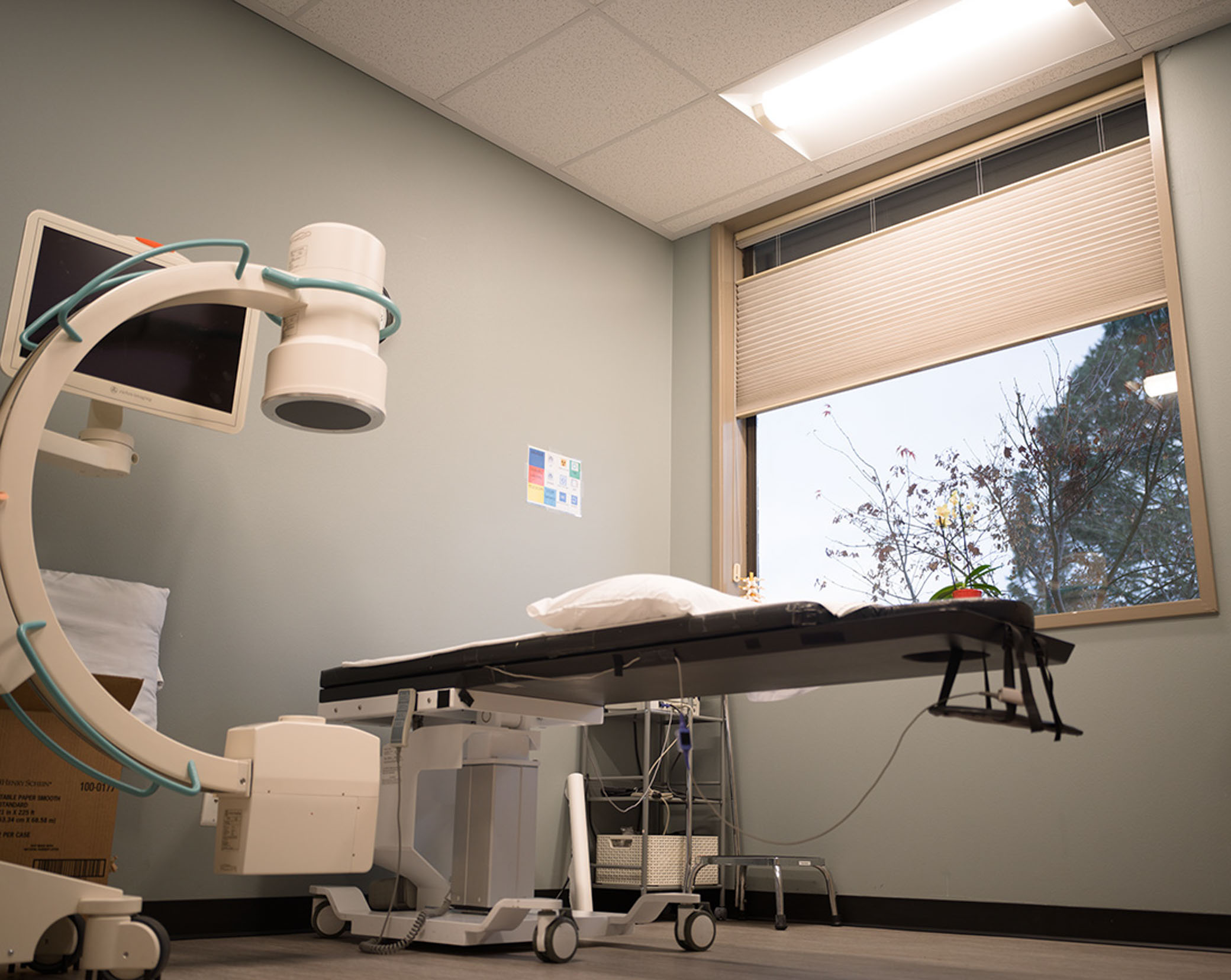
If your nervous system has been on alert since the collision, a bright, loud, hurried waiting room adds to the load before anyone has touched you. Every treatment room here has large windows and real daylight.

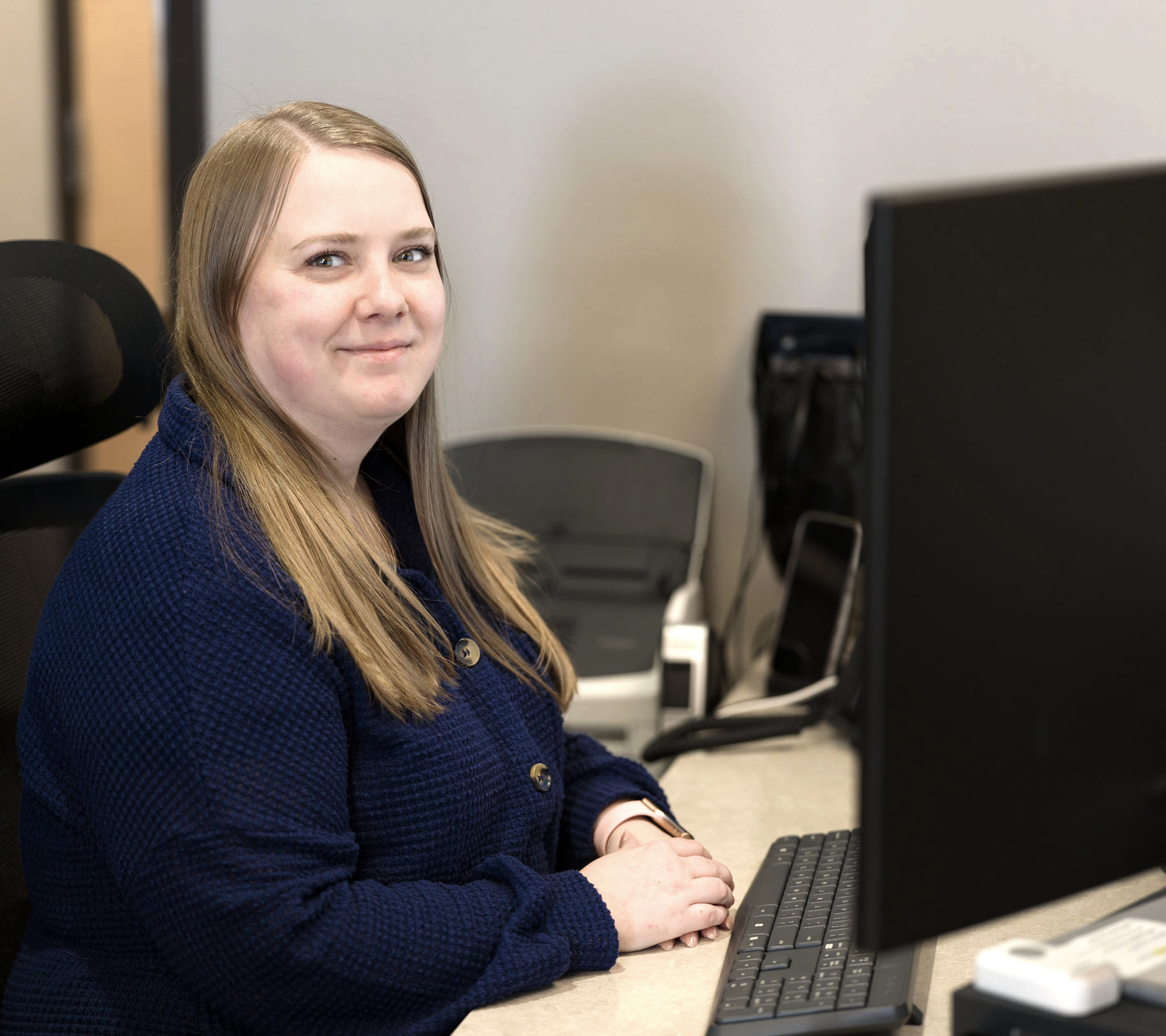
The schedule is built so that nobody is moving you along, and the front desk is two people who will know your name by the second visit. It is the same argument as the hour, made with the building.

A patient, on the pace

“Every visit is enjoyable because he listens to my concerns, helps me understand my pain, and explains the treatment plan clearly. Dr. Franke ensures I feel comfortable and never rushed. I’ve never felt like just another patient.”

Nadia M. Patient · Northeast Seattle, WA · March 2025
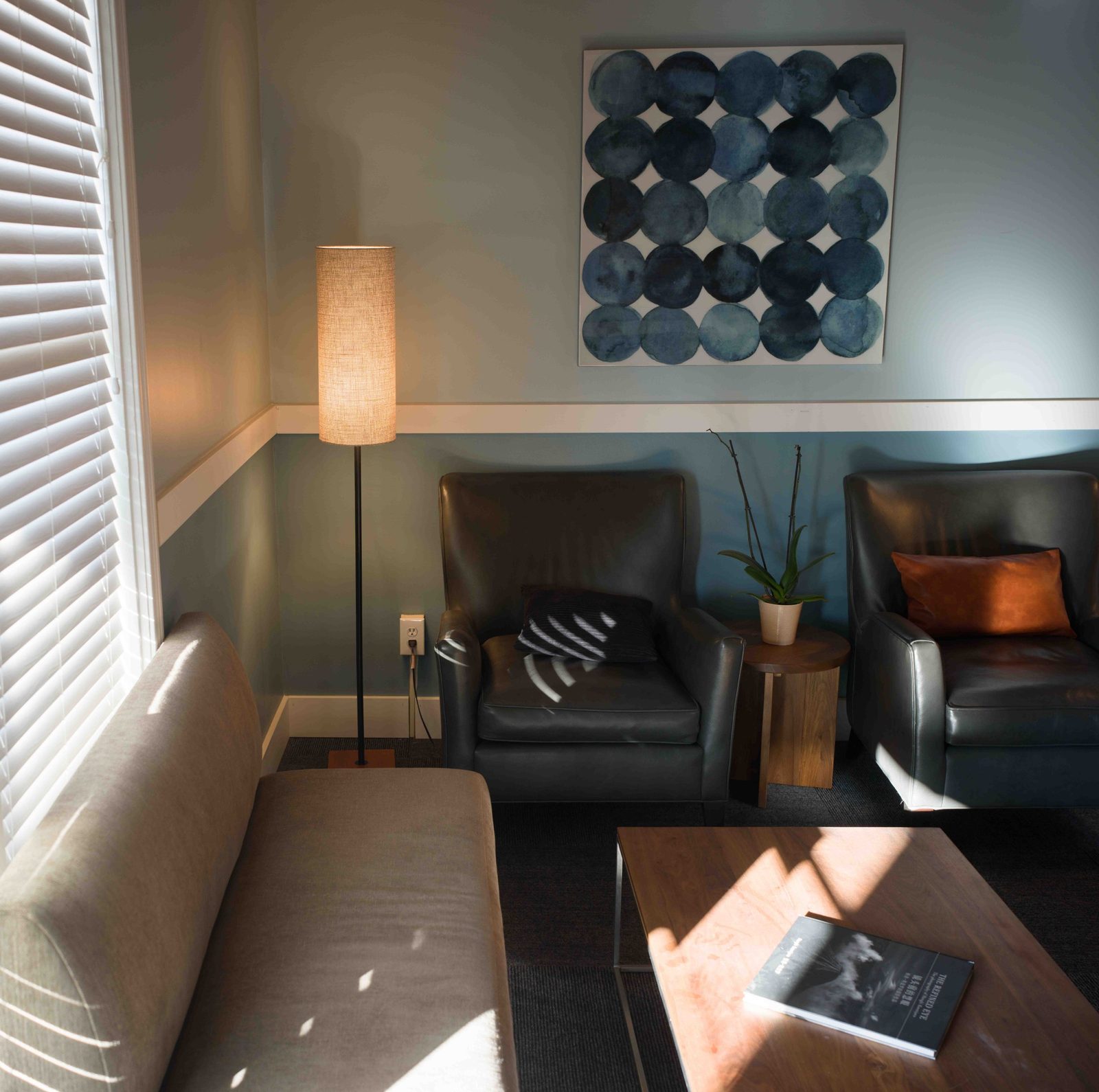
A treatment room with an exam table beside a large window
Large windows in every treatment room. For a nervous system that has been on alert for months, that is not a small thing.

Who you’ll be seeing

Dr. Kelvin Franke, DO, board-certified physiatrist

Kelvin Franke, DO

Seventeen years in the Greater Seattle area: first inside orthopedic surgery groups, then a decade in complex spine and sports medicine. Sound Injury is my own clinic, and it is deliberately small, because an hour with the doctor only stays an hour with the doctor if somebody protects it.

  • Board certified in Physical Medicine & Rehabilitation (ABPMR)
  • Subspecialty board certified in Electrodiagnostic Medicine (AANEM)
  • Castle Connolly Top Doctor, 2014 to 2026
  • Authorized Washington State L&I provider

A vision for dual recovery

I wanted a place where physical rehabilitation and mental health support sit side by side instead of in separate buildings. Working in close alignment with counsellors, and keeping real relationships with physical therapists and chiropractors, means the whole person reality of trauma gets treated as one thing rather than passed around. Your physical and emotional recovery can happen together.

What that looks like in practice

A patient, after five providers

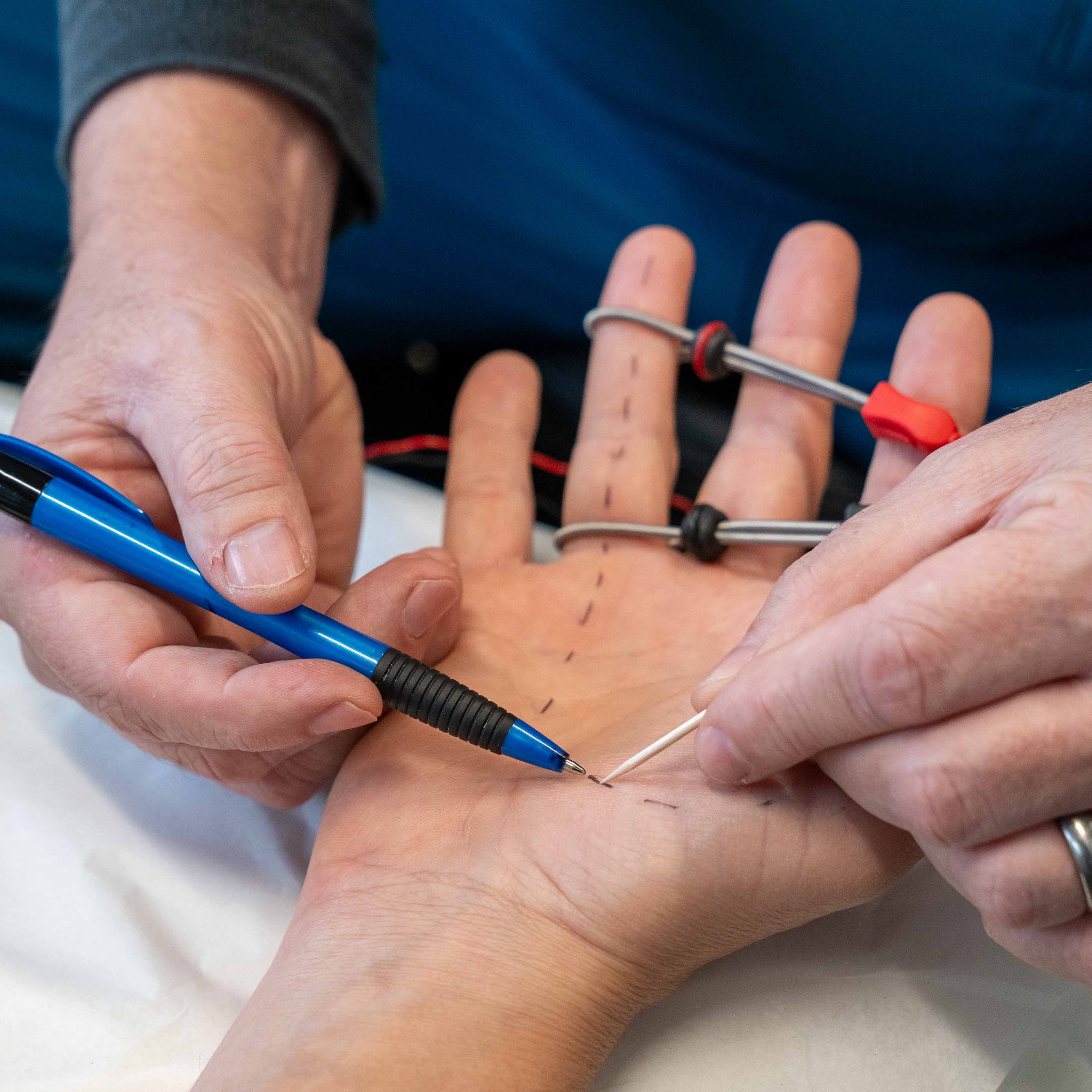
“I came into his office feeling desperate as I had seen many doctors, therapists, PT, chiropractic, and hours of self-care without much relief. Dr. Franke thoroughly listened to my concerns during an EMG exam and he was able to replicate the referring pain I had been experiencing. He suggested intermuscular needling to trigger points in my upper soft tissue that had been damaged from an injury. I walked out of his office in tears because I had finally experienced some relief. With each session, I have gained back more strength and mobility while experiencing less pain and tension.”

Katia L.Patient · Lynnwood, WA · February 2025
An orthopedic surgeon, on non-surgical care

“I’ve shared patients with Dr Franke for nearly 20 years. He is a conscientious, caring and plain-spoken physician. He is my go-to provider for non-surgical musculoskeletal care.”

David Kuechle, MDOrthopedic Surgeon · Proliance Edmonds Orthopedics · 2026

A chiropractor, on what the imaging missed

“Dr. Kelvin Franke is an outstanding injury physiatrist and my preferred referral for motor vehicle trauma, concussions, and complex neuro-musculoskeletal injuries. He’s exceptionally skilled at using advanced electrodiagnostics (EMG/NCS) to uncover hidden nerve or mechanical issues that stall recovery, even when imaging looks completely normal. Dr. Franke combines sharp clinical expertise with genuine compassion, excellent listening, and a true whole-person approach.”

Dr. Jayson Sipress, DCHybrid Sports Chiropractic · 2026

And a dozen more, briefly

Patient

“Dr. Franke has been a life changer. I’ve struggled with chronic pain for over 21 years now.”

Angie L.Google review · 2026
Referring provider

“My top choice for pain management physiatric consultation in the North Seattle and Snohomish County region.”

Ben McCay, DCAdvanced Chiropractic · Everett, WA
Patient

“He truly cares about his patients and does everything he can to help them.”

Scott P.Google review · 2026
Referring provider

“When I need to refer any patient to the next level, Dr. Franke is always my top choice.”

Frank Wen, DCIntegrity Chiropractic
Patient

“From EMG testing to treatment and rehabilitation, I felt well cared for every step of the way.”

Adriana T.2026
Referring provider

“He was able to isolate three muscles that, when spasmed, reproduced the patient’s pain. Six months later this patient is pain free.”

Tiffany Mathias, MD, MBAPain Physician
Patient

“Knowledgeable, highly skilled, patient, supportive, and kind. I highly recommend Dr. Franke and his team.”

Allison B.Edmonds, WA · 2025
Referring provider

“He is a provider I trust to care for my patients.”

Shawnee Perkins, DPTImpact Physical Therapy
Patient

“Thank you for taking such great care of me after my car accident. My only regret is not coming to you sooner.”

Vika G.2025
Referring provider

“His understanding of neuromuscular and soft tissue dynamics is outstanding, and his respect for interdisciplinary collaboration directly improves patient outcomes.”

Said Yaaquobi, LMPMassage Therapy
Patient

“So much eagerness, knowledge and passion to figure out the root problem. Ten out of ten for sure.”

Ashley E.2023
Patient

“The professionalism of the whole team. He is knowledgeable, pleasant and is a good listener.”

Elena T.Lynnwood, WA · 2025

Swipe to read more.Drag to read more, or use the arrow keys.

For chiropractors, physical therapists, and physicians

Another set of eyes on a difficult case

I take referrals for diagnostic clarity, EMG and nerve conduction studies, second opinions on complex presentations, and co-management of cases that have stopped moving. What comes back to you is a clear diagnostic opinion, a targeted intervention where it helps, and a note you can actually use.

Patients are usually contacted within a business day. Nerve testing is typically scheduled within the week, and the EMG report is completed and sent within one business day of the study. If you would rather talk a case through first, call (425) 678-2044. Curbside consults are welcome, there is no charge for them, and I return provider calls the same day where I can.

Email the referral

Send it to care@soundinjury.com. Include the initial exam note, the most recent note, and any imaging reports.

care@soundinjury.com →

Or use the online form

The scheduling form takes referral details directly. Complete it on your patient’s behalf, or send them the link.

Open the referral form →

Finding us

Finding the clinic

We are on 198th St SW in Lynnwood, Suite 300, a block from Lynnwood City Center light rail. From October 1 we will be five minutes west, in Edmonds.

Sound Injury & Electrodiagnostics

4300 198th St SW, Suite 300
Lynnwood, WA 98036

Phone
(425) 678-2044
Fax
(425) 264-6294
Email
care@soundinjury.com
Hours
Monday to Friday, 8:00 AM to 4:30 PM

Finding the door

Suite 300, on 198th St SW. The building is single storey, so there are no stairs and no elevator to work out. That matters more than it sounds when your neck will not turn.

The carved stone by the entrance is how you will know you are in the right place.

Parking and transit

Easy free parking on site. No permit, no garage, no meter.

Lynnwood City Center light rail is a block away, which matters if driving is still difficult.

When to get here

New patients: 30 minutes early to finish paperwork, or fill the forms in beforehand and just come 10 minutes early.

Follow-ups and EMG: 10 to 15 minutes early is plenty.

What to bring

  • Photo ID and insurance card
  • Recent imaging: discs or printed reports
  • A list of your current medications
  • For a crash or work injury: claim number and adjuster contact
Oct 1

The Edmonds clinic opens October 1, 2026

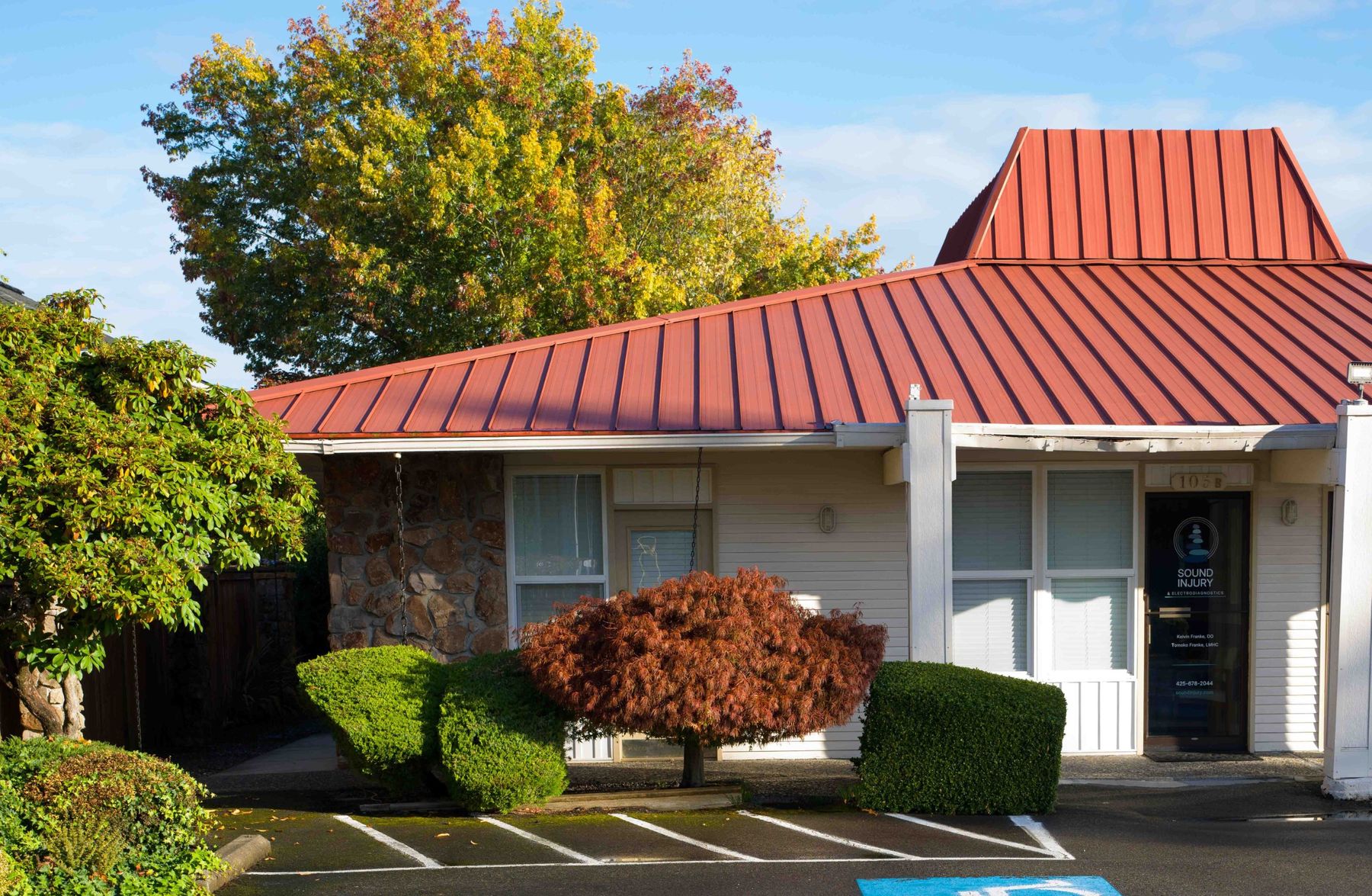
7631 212th St SW, Suite B-105, Edmonds, WA 98026. In the Edmonds Medical and Professional Buildings, directly across 212th from Edmonds-Woodway High School. Look for the central octagonal building; we are the suite immediately to its left, visible from the street, with extensive free parking.

Same phone number, same fax, same front desk. Appointments already booked are unaffected, and nothing needs rescheduling. Care that starts in Lynnwood continues in Edmonds with the same records and the same physician.

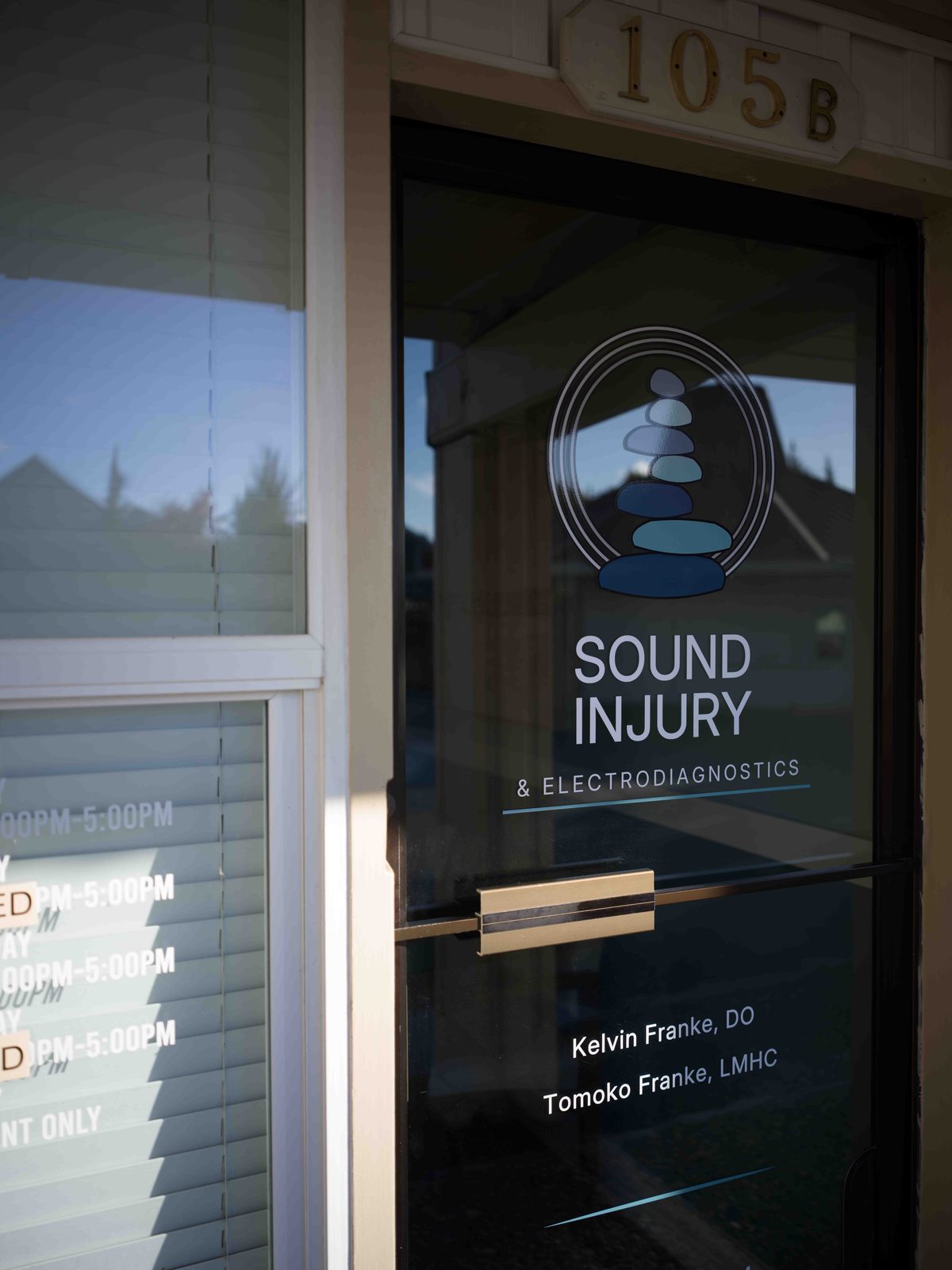
The Edmonds entrance: a glass door marked 105 B with the Sound Injury cairn logo, Kelvin Franke DO and Tomoko Franke LMHC, and the opening hours on the window beside it
Suite B-105. This is the door.

Paying for it

What it costs, plainly

More in common questions below.

  • YesCar accident (PIP). Pays regardless of fault, usually with no copay or deductible. We bill it directly, and no referral is needed.
  • YesL&I work injuries. Consultations case by case; EMG referrals always accepted. I work as a consultant alongside whoever is directing your claim.
  • YesSelf-pay. No referral needed.
  • AskCommercial insurance. Some plans require a referral. Call and the front desk will work out what yours needs.

Common questions

Insurance, referrals and what to expect

How fast can I get an EMG, and when will the report arrive?

Testing is usually scheduled within a week. The study is performed and interpreted by me, board certified in electrodiagnostic medicine through AANEM, and the report is completed and sent within one business day of the study.

Referrals from physicians, chiropractors and other providers are welcome.

What is a physiatrist?

A physician who specializes in Physical Medicine and Rehabilitation. Medical school, a four year PM&R residency, and board certification through the American Board of Physical Medicine and Rehabilitation.

Physiatrists restore function after injury. Rather than surgery, the emphasis is on accurate diagnosis, rehabilitation, coordinating the people treating you, and getting you back to work and ordinary life.

What is a D.O.?

A Doctor of Osteopathic Medicine is a fully licensed physician with the same training, licensing and practice rights as an M.D. Four years of medical school, a four year residency, the same board certifications.

The difference is emphasis. Osteopathic medicine treats the whole person, and D.O.s get additional training in osteopathic manual medicine, which is where the hands on part of this work comes from.

A carved granite stone showing a tree and its roots inside a circle, with the words: Care that looks below the surface

“Care that looks below the surface.”

If the pain has outlasted everyone’s explanation, come and get one.